Tattoo inks consist of pigments combined with a carrier and are used in tattooing. Tattoo inks are available in a range of colors that can be thinned or mixed together to produce other colors and shades. Most professional tattoo artists purchase inks pre-made (known as pre-dispersed inks), while some tattooers mix their own using a dry pigment and a carrier.
Tattoo ink is generally permanent. Tattoo removal is difficult, painful, and the degree of success depends on the materials used. Recently developed inks claim to be comparatively easy to remove. Unsubstantiated claims have been made that some inks fade over time, yielding a "semi-permanent tattoo."
A tattoo is a form of body modification made by inserting ink, dyes, and/or pigments, either indelible or temporary, into the dermis layer of the skin to form a design. The art of making tattoos is known as tattooing.
Tattoos comprise three broad categories: purely decorative (with no specific meaning), symbolic (with a specific meaning pertinent to the wearer), and pictorial (a depiction of a specific person or item). In addition, tattoos can be used for identification such as ear tattoos on livestock as a form of branding.
Ink
Yes, ink is what is used to create a tattoo, but is an artist’s least favorite term. Some will refer to their tattoos as ink. In popular culture, ink is thrown around more than you’re likely to hear in real life and most artists won’t refer to anything but the small tubs of colour they’re using in your tattoo as ink.
The
Little Prince (French: Le Petit Prince), first published in April 1943, is a
novella, the most famous work of French aristocrat, writer, poet, and
pioneering aviator Antoine de Saint-Exupéry (29 June 1900 – 31 July 1944).
The
novella has been voted the best book of the 20th century in France. Translated
into 300 languages and dialects, selling nearly two million copies annually,
and with year-to-date sales of over 140 million copies worldwide, it has become
one of the best-selling and most translated books ever published.
After
the outbreak of the Second World War, Saint-Exupéry escaped to North America.
Despite personal upheavals and failing health, he produced almost half of the
writings for which he would be remembered, including a tender tale of
loneliness, friendship, love, and loss, in the form of a young prince visiting
Earth. An earlier memoir by the author had recounted his aviation experiences
in the Sahara Desert, and he is thought to have drawn on those same experiences
in The Little Prince.
Since
its first publication, the novella has been adapted to numerous art forms and
media, including audio recordings, radio plays, live stage, film, television,
ballet, and opera.
Though
ostensibly styled as a children's book, The Little Prince makes several
observations about life and human nature.
The death of the Hollywood icon, who was best known for her film work in the late 50s and 60s and her hit song Que Sera Seraw, as announced by her foundation today.
The
Neolithic, (also known as the "New Stone Age"), the final division of
the Stone Age, began about 12,000 years ago when the first development of
farming appeared in the Epipalaeolithic Near East, and later in other parts of
the world. The division lasted until the transitional period of the
Chalcolithic from about 6,500 years ago (4500 BC), marked by the development of
metallurgy, leading up to the Bronze Age and Iron Age. In Northern Europe, the
Neolithic lasted until about 1700 BC, while in China it extended until 1200 BC.
Other parts of the world (including the New World) remained broadly in the
Neolithic stage of development, although this term may not be used, until
European contact.
The
Neolithic comprises a progression of behavioral and cultural characteristics
and changes, including the use of wild and domestic crops and of domesticated
animals.
The term
Neolithic derives from the Greek νέος néos, "new" and λίθος líthos,
"stone", literally meaning "New Stone Age". The term was
coined by Sir John Lubbock in 1865 as a refinement of the three-age system.
What
Kind of Clothing Did Neolithic People Wear?
Neolithic
people wore handmade cloaks, shoes and head-dressings. During the Neolithic
transition, when a large portion of the population settled in sedentary farming
communities, advances in textiles, tooling and resources allowed for better
quality clothing to be made.
Furs and
non-cured hides were among the most popular materials used to make clothing
during the Neolithic Age. Furs required the least amount of processing, as they
were pinned together with bone fasteners, rather than stitched. They were also
the best material to provide protection to the body during harsh, cold winter
months.
With the
surplus production in agriculture following the transition to sedentary life,
cultivators began trading their harvest of flax, cotton, wool and goat hair for
specialized services like weaving, making textiles abundantly available. Each
household began to weave its own clothing. Some weavers with specialized skills
began to manufacture excess clothing for trade of grains, milk and meat.
Specialized weavers produced clothing with stitched patterns, dyed textiles and
scraped hides.
As the
Neolithic transition progressed, people began paying closer attention to their
appearance. In addition to better quality clothes, people began enhancing their
looks with jewelry and makeup. Women rubbed hematite on their cheeks and lips
to create a reddish glow. Seashells and string were used by both men and women
to create bracelets, headpieces and necklaces with which they could adorn their
cloaks.
Fur is a
thick growth of hair that covers the skin of many animals. It is a defining
characteristic of mammals. It consists of a combination of oily guard hair on
top and thick underfur beneath. The guard hair keeps moisture and the underfur
acts as an insulating blanket that keeps the animal warm.
A leopard's disruptively colored coat provides camouflage for this ambush predator.
The fur
of mammals has many uses: protection, sensory purposes, waterproofing, and
camouflage, with the primary usage being thermoregulation. The types of hair
include definitive, which may be shed after reaching a certain length;
vibrissae, which are sensory hairs and are most commonly whiskers; pelage,
which consists of guard hairs, under-fur, and awn hair; spines, which are a
type of stiff guard hair used for defense in, for example, porcupines;
bristles, which are long hairs usually used in visual signals, such as the mane
of a lion; velli, often called "down fur," which insulates newborn mammals;
and wool, which is long, soft, and often curly. Hair length is negligible in
thermoregulation, as some tropical mammals, such as sloths, have the same fur
length as some arctic mammals but with less insulation; and, conversely, other
tropical mammals with short hair have the same insulating value as arctic
mammals. The denseness of fur can increase an animal's insulation value, and
arctic mammals especially have dense fur; for example, the musk ox has guard
hairs measuring 30 cm (12 in) as well as a dense underfur, which forms an
airtight coat, allowing them to survive in temperatures of −40 °C (−40 °F).
Some desert mammals, such as camels, use dense fur to prevent solar heat from
reaching their skin, allowing the animal to stay cool; a camel's fur may reach
70 °C (158 °F) in the summer, but the skin stays at 40 °C (104 °F). Aquatic
mammals, conversely, trap air in their fur to conserve heat by keeping the skin
dry.
musk ox
Mammalian
coats are colored for a variety of reasons, the major selective pressures
including camouflage, sexual selection, communication, and physiological
processes such as temperature regulation. Camouflage is a powerful influence in
a large number of mammals, as it helps to conceal individuals from predators or
prey. Aposematism, warning off possible predators, is the most likely
explanation of the black-and-white pelage of many mammals which are able to
defend themselves, such as in the foul-smelling skunk and the powerful and
aggressive honey badger. In arctic and subarctic mammals such as the arctic fox(Alopex lagopus), collared lemming(Dicrostonyx groenlandicus), stoat(Mustela
erminea), and snowshoe hare(Lepus americanus), seasonal color change between
brown in summer and white in winter is driven largely by camouflage.
Differences in female and male coat color may indicate nutrition and hormone
levels, important in mate selection. Some arboreal mammals, notably primates
and marsupials, have shades of violet, green, or blue skin on parts of their
bodies, indicating some distinct advantage in their largely arboreal habitat
due to convergent evolution. The green coloration of sloths, however, is the
result of a symbiotic relationship with algae. Coat color is sometimes sexually
dimorphic, as in many primate species. Coat color may influence the ability to
retain heat, depending on how much light is reflected. Mammals with a darker
colored coat can absorb more heat from solar radiation, and stay warmer, and
some smaller mammals, such as voles, have darker fur in the winter. The white,
pigmentless fur of arctic mammals, such as the polar bear, may reflect more
solar radiation directly onto the skin.
Honey Badger and Mole Snake
The term
pelage – first known use in English c. 1828 (French, from Middle French, from
poil for "hair", from Old French peilss, from Latin pilus – is sometimes
used to refer to an animal's complete coat. The term fur is also used to refer
to animal pelts which have been processed into leather with their hair still
attached. The words fur or furry are also used, more casually, to refer to
hair-like growths or formations, particularly when the subject being referred
to exhibits a dense coat of fine, soft "hairs". If layered, rather
than grown as a single coat, it may consist of short down hairs, long guard
hairs, and in some cases, medium awn hairs. Mammals with reduced amounts of fur
are often called "naked", as with the naked mole-rat, or
"hairless", as with hairless dogs.
Neanderthal
An
animal with commercially valuable fur is known within the fur industry as a
furbearer. The use of fur as clothing or decoration is controversial; animal
welfare advocates object to the trapping and killing of wildlife, and to the
confinement and killing of animals on fur farms.
Use in clothing
Fur has
long served as a source of clothing for humans, including Neanderthals.
Historically, it was worn for its insulating quality, with aesthetics becoming
a factor over time. Pelts were worn in or out, depending on their
characteristics and desired use. Today fur and trim used in garments may be
dyed bright colors or to mimic exotic animal patterns, or shorn close like
velvet. The term "a fur" may connote a coat, wrap, or shawl.
The
manufacturing of fur clothing involves obtaining animal pelts where the hair is
left on the animal's processed skin. In contrast, making leather involves
removing the hair from the hide or pelt and using only the skin. The use of
wool involves shearing the animal's fleece from the living animal, so that the
wool can be regrown but sheepskin shearling is made by retaining the fleece to
the leather and shearing it. Shearling is used for boots, jackets and coats and
is probably the most common type of skin worn.
Fur is
also used to make felt. Felt is a textile material that is produced by matting,
condensing and pressing fibers together. Felt can be made of natural fibers
such as wool or animal fur, or from synthetic fibers such as petroleum-based
acrylic or acrylonitrile or wood pulp-based rayon. Blended fibers are also
common. A common felt is made from beaver fur and is used in high-end cowboy
hats.
Fur
today
In spite
of organized backlash against it, the fur market in 2016 Was $30 billion.
Heritage fashion houses such as Hermès, Dior and Chanel still use natural fur.
Alex Mcintosh, who leads the Fashion Futures post grad program at London College
of Fashion, says “Change on this level would only be driven on a genuine lack
of demand and not just social media outcry”. As McIntosh puts it, “The choice
not to sell fur is not an environmental decision. People conflating not
selling fur with sustainability is quite dangerous, because they are not the
same thing. It’s not a choice that is about sustainability, it’s a choice about
ethics and what you think is acceptable in terms of animal welfare."
No, I don't like madams with a fur coat
Madams with a fur coat are mean
I not need nothing from madams with a
fur coat
Against madam with a fur coat I say no
I think I can tell you now
I'm going to start a case in madams
skins
I'm going to catch them on the Avenue
Louise
On banquets, horse racing and smart
receptions
In the Saturday Night Fever pub
At the Rotary and the Lions club
With my big mousetrap and my bottle full
of poison
American
Fur Company (1808-1842) – Founded by John Jacob Astoron
April 6, 1808, the American
Fur Company would become one of the largest businesses in the country at the
start of the 19th century. Astor began this ambitious venture to compete with
the two-great fur-trading companies in Canada – the Hudson’s Bay Company and
the North West Company.
Initially,
Astor’s operation in the Columbia River Valley of Oregon was under a subsidiary
called the Pacific Fur Company and his Great Lakes efforts were under another
subsidiary — the South West Company. However, the War of 1812 destroyed both
companies. Five years later, in 1817, Congress passed an act which excluded
foreign traders from U.S. territory, making the American Fur Company the
biggest in the Great Lakes region.
In 1821,
the company partnered with the Chouteau interests of St. Louis, Missouri,
giving the company a monopoly in the Missouri River region and later, in the
Rocky Mountains. Growing larger each year, the American Fur Company made a
practice of buying out small businesses or putting them out of business with
stiff competition, virtually having a market on the entire fur trade by 1830.
Astor withdrew in 1834 and the company split up.
To save
expenses a number of the many trading posts were closed, and heavy competition
began to resurface. Shortly, thereafter, the demand for furs began to decrease
dramatically. Despite efforts to increase profits by diversifying into other
industries like lead mining, the American Fur Company folded in 1842. The
remaining assets of the company were split into several smaller operations,
most of which failed by the 1850’s.
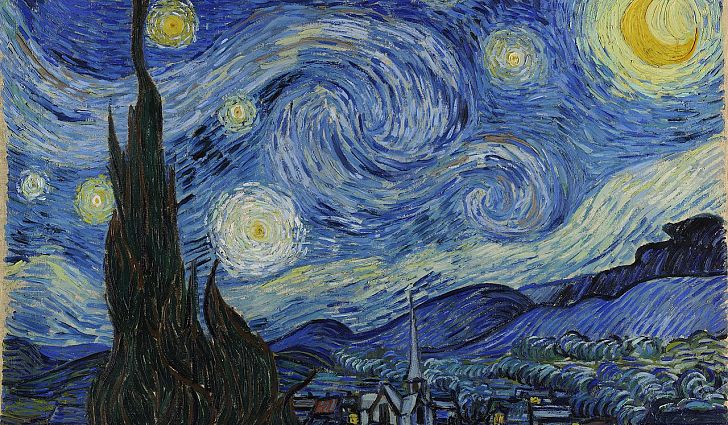
Vincent
Willem van Gogh 30 March 1853 – 29 July 1890 was a Dutch Post-Impressionist
painter who is among the most famous and influential figures in the history of
Western art. In just over a decade he created about 2,100 artworks, including
around 860 oil paintings, most of them in the last two years of his life. They
include landscapes, still lifes, portraits and self-portraits, and are
characterised by bold colours and dramatic, impulsive and expressive brushwork
that contributed to the foundations of modern art. However, he was not
commercially successful, and his suicide at 37 followed years of mental illness
and poverty.
Born
into an upper-middle-class family, Van Gogh drew as a child and was serious,
quiet and thoughtful. As a young man he worked as an art dealer, often
travelling, but became depressed after he was transferred to London. He turned
to religion and spent time as a Protestant missionary in southern Belgium. He
drifted in ill health and solitude before taking up painting in 1881, having
moved back home with his parents. His younger brother Theo supported him
financially, and the two kept up a long correspondence by letter. His early
works, mostly still lifes and depictions of peasant labourers, contain few
signs of the vivid colour that distinguished his later work. In 1886, he moved
to Paris, where he met members of the avant-garde, including Émile Bernard and
Paul Gauguin, who were reacting against the Impressionist sensibility. As his
work developed, he created a new approach to still lifes and local landscapes.
His paintings grew brighter in colour as he developed a style that became fully
realised during his stay in Arles in the south of France in 1888. During this period,
he broadened his subject matter to include series of olive trees, wheat fields
and sunflowers.
Van Gogh
suffered from psychotic episodes and delusions and though he worried about his
mental stability, he often neglected his physical health, did not eat properly
and drank heavily. His friendship with Gauguin ended after a confrontation with
a razor, when in a rage, he severed part of his own left ear. He spent time in
psychiatric hospitals, including a period at Saint-Rémy. After he discharged
himself and moved to the Auberge Ravoux in Auvers-sur-Oise near Paris, he came
under the care of the homeopathic doctor Paul Gachet. His depression continued
and on 27 July 1890, Van Gogh shot himself in the chest with a revolver. He
died from his injuries two days later.
Van Gogh
was unsuccessful during his lifetime and was considered a madman and a failure.
He became famous after his suicide and exists in the public imagination as the
quintessential misunderstood genius, the artist "where discourses on
madness and creativity converge". His reputation began to grow in the
early 20th century as elements of his painting style came to be incorporated by
the Fauves and German Expressionists. He attained widespread critical,
commercial and popular success over the ensuing decades, and is remembered as
an important but tragic painter, whose troubled personality typifies the
romantic ideal of the tortured artist. Today, Van Gogh's works are among the world's
most expensive paintings to have ever sold at auction, and his legacy is
honoured by a museum in his name, the Van Gogh Museum in Amsterdam, which holds
the world's largest collection of his paintings and drawings.
Australia Day is the official national day of
Australia. Celebrated annually on 26 January, it marks the anniversary of the
1788 arrival of the First Fleet of British ships at Port Jackson, New South
Wales, and the raising of the Flag of Great Britain at Sydney Cove by Governor
Arthur Phillip. In present-day Australia, celebrations reflect the diverse
society and landscape of the nation and are marked by community and family
events, reflections on Australian history, official community awards and
citizenship ceremonies welcoming new members of the Australian community.
The meaning and significance of Australia Day has
evolved over time. Unofficially, or historically, the date has also been
variously named "Anniversary Day", "Foundation Day" and
"ANA Day". The date of 26 January 1788 marked the proclamation of
British sovereignty over the eastern seaboard of Australia (then known as New
Holland). Although it was not known as Australia Day until over a century
later, records of celebrations on 26 January date back to 1808, with the first
official celebration of the formation of New South Wales held in 1818. On New
Year's Day 1901, the British colonies of Australia formed a federation, marking
the birth of modern Australia. A national day of unity and celebration was
looked for. It was not until 1935 that all Australian states and territories adopted
use of the term "Australia Day" to mark the date, and not until 1994
that the date was consistently marked by a public holiday on that day by all
states and territories.
In contemporary Australia, the holiday is marked by
the presentation of the Australian of the Year Awards on Australia Day Eve,
announcement of the Australia Day Honours list and addresses from the
Governor-General and the Prime Minister. It is an official public holiday in
every state and territory. With community festivals, concerts and citizenship
ceremonies, the day is celebrated in large and small communities and cities
around the nation. Australia Day has become the biggest annual civic event in
Australia.
Some Indigenous Australian events are now included.
However, since at least 1938, the date of Australia Day has also been marked by
Indigenous Australians, and those sympathetic to their cause, mourning what
they see as the invasion of their land by Europeans and protesting its
celebration as a national holiday. These groups sometimes refer to 26 January
as Invasion Day or Survival Day and advocate that the date should be changed,
or that the holiday should be abolished entirely. However, support for changing
the date amongst the Australian population is low, with a 2017 poll conducted
for The Guardian finding only 26% of the total population supports changing the
date. The same poll found that most Indigenous Australians want a date and name
change of Australia Day, with only 23% saying they felt positive about
Australia Day.
Edgar Allan Poe; born Edgar Poe; January 19, 1809 –
October 7, 1849) was an American writer, editor, and literary critic. Poe is
best known for his poetry and short stories, particularly his tales of mystery
and the macabre. He is widely regarded as a central figure of Romanticism in
the United States and of American literature, and he was one of the country's
earliest practitioners of the short story. He is generally considered the
inventor of the detective fiction genre and is further credited with
contributing to the emerging genre of science fiction. He was the first
well-known American writer to earn a living through writing alone, resulting in
a financially difficult life and career.
Poe was born in Boston, the second child of actors
David and Elizabeth "Eliza" Arnold Hopkins Poe. His father abandoned
the family in 1810, and his mother died the following year. Thus orphaned, the
child was taken in by John and Frances Allan of Richmond, Virginia. They never
formally adopted him, but he was with them well into young adulthood. Tension
developed later as John Allan and Poe repeatedly clashed over debts, including
those incurred by gambling, and the cost of Poe's secondary education. He
attended the University of Virginia but left after a year due to lack of money.
Poe quarrelled with Allan over the funds for his education and enlisted in the
Army in 1827 under an assumed name. It was at this time that his publishing
career began with the anonymous collection Tamerlane and Other Poems (1827),
credited only to "a Bostonian". Poe and Allan reached a temporary
rapprochement after the death of Frances Allan in 1829. Poe later failed as an
officer cadet at West Point, declaring a firm wish to be a poet and writer, and
he ultimately parted ways with John Allan. Poe switched his focus to prose and spent the next
several years working for literary journals and periodicals, becoming known for
his own style of literary criticism. His work forced him to move among several
cities, including Baltimore, Philadelphia, and New York City. He married
Virginia Clemm in 1836, his 13-year-old cousin. In January 1845, Poe published
his poem "The Raven" to instant success, but Virginia died of
tuberculosis two years after its publication. Poe planned for years to produce his own journal The
Penn (later renamed The Stylus), but he died before it could be produced. He
died in Baltimore on October 7, 1849 at age 40; the cause of his death is
unknown and has been variously attributed to alcohol, "brain
congestion", cholera, drugs, heart disease, rabies, suicide, tuberculosis,
and other causes.
Poe and his works influenced literature around the
world, as well as specialized fields such as cosmology and cryptography. He and
his work appear throughout popular culture in literature, music, films, and
television. A number of his homes are dedicated museums today. The Mystery
Writers of America present an annual award known as the Edgar Award for
distinguished work in the mystery genre.
A
Christmas market, also known as Christkindlmarkt (literally: Baby Jesus
Market), Christkindlesmarkt, Christkindlmarket, Christkindlimarkt, and
Weihnachtsmarkt, is a street market associated with the celebration of
Christmas during the four weeks of Advent. These markets originated in Germany
but are now being held in many other countries. The history of Christmas
markets goes back to the Late Middle Ages in the German-speaking part of
Europe, and in many parts of the former Holy Roman Empire that includes many
eastern regions of France. The Christmas markets of Bautzen were first held in
1384. Dresden's Striezelmarkt was first held in 1434. Frankfurt was first
mentioned in 1393, Munich in 1310, and Augsburg in 1498. In Austria, Vienna's
"December market" can be considered a forerunner of Christmas markets
and dates back to 1298.
Zwetschgenmännle
In many
towns in Germany, Switzerland, and Austria, Advent is usually ushered in with
the opening of the Christmas market or "Weihnachtsmarkt". In southern
Germany, Switzerland and Austria, it is called a
"Christkind(e)l(s)(i)markt"(German language, literally meaning
"Christ child market"). Traditionally held in the town square, the
market has food, drink and seasonal items from open-air stalls accompanied by
traditional singing and dancing. On opening night at the Christkindlesmarkt in
Nuremberg, and in some other towns, onlookers welcome the
"Christkind" (originally boy Jesus, but often depicted as an
angel-like girl), acted out by a local child.
Attractions
and stalls
Gebrannte Mandeln
Popular
attractions at the markets include the Nativity Scene (a crèche or crib),
Zwetschgenmännle (figures made of decorated dried plums), Nussknacker (carved
Nutcrackers), Gebrannte Mandeln (candied, toasted almonds), traditional
Christmas cookies such as Lebkuchen and Magenbrot (both forms of soft
gingerbread), Bratwurst, and for many visitors one of the highlights of the
market: Glühwein, hot mulled wine (with or without a shot of brandy), or
Eierpunsch (an egg-based warm alcoholic drink). Both help stave off the cold
winter air which sometimes dips below freezing. More regional food specialties
include Christstollen (Stollen), a sort of bread with candied fruit in Saxony,
and hot Apfelwein and Frankfurter Bethmännchen in Hesse.
International
Students' Day is an international observance of the student community, held
annually on November 17. Originally commemorating the Nazi storming of Czech
universities in 1939 and the subsequent killing and sending of students to
concentration camps, it is now marked by a number of universities, sometimes on
a day other than November 17, as a nonpolitical celebration of the
multiculturalism of their international students.
Origin
The date
commemorates the anniversary of the 1939 Nazi storming of the University of
Prague after demonstrations against the German occupation of Czechoslovakia and
the killings of Jan Opletal and worker Václav Sedláček. The Nazis rounded up
the students, murdered nine student leaders and sent over 1,200 students to concentration
camps, mainly Sachsenhausen. They subsequently closed all Czech universities
and colleges. By this time Czechoslovakia no longer existed, as it had been
divided into the Protectorate of Bohemia and Moravia and the Slovak Republic
under a fascist puppet government.
Jan Opletal
In late
1939 the Nazi authorities in the Protectorate of Bohemia and Moravia suppressed
a demonstration in Prague held by students of the Medical Faculty of Charles
University. The demonstration was held on 28 October to commemorate the
anniversary of the independence of the Czechoslovak Republic (1918). During
this demonstration the student Jan Opletal was shot, and later died from his
injuries on 11 November. On 15 November his body was supposed to be transported
from Prague to his home in Moravia. His funeral procession consisted of
thousands of students, who turned the event into an anti-Nazi demonstration.
However, the Nazi authorities took drastic measures in response, closing all
Czech higher education institutions, arresting more than 1,200 students, who
were then sent to concentration camps, executing nine students and professors
without trial on 17 November. Historians speculate that the Nazis granted
permission for the funeral procession already expecting a violent outcome, in
order to use that as a pretext for closing down universities and purging
anti-fascist dissidents.
In 2009,
on the 70th anniversary of 17 November 1939, OBESSU and ESU promoted a number
of initiatives throughout Europe to commemorate the date. An event was held
from 16 to 18 November at the University of Brussels, focusing on the history
of the students' movement and its role in promoting active citizenship against
authoritarian regimes, and followed by an assembly discussing the role of
student unions today and the need for the recognition of a European Student
Rights Charter. The conference gathered around 100 students representing
national students and student unions from over 30 European countries, as well
as some international delegations.
The
famous encounter between Livingstone (David Livingstone; 19 March 1813 – 1 May
1873) and Stanley (Sir Henry Morton Stanley GCB (born John Rowlands; 28 January
1841 – 10 May 1904) is not significant in the story of the European exploration
of Africa (except in so far as it stirs Stanley's own ambitions in the field)
but it is one of the most dramatic incidents of the period and is rightly
famous - in the version of it published by Stanley in How I Found Livingstone
(1872).
Finding
Livingstone is a matter of public concern at the time because little has been
heard of the famous explorer since the start of his latest expedition into the
interior of Africa in 1866.
On this
expedition (it transpires later) Livingstone reaches Lake Bangweulu, Lake Mweru
and the southern end of Lake Tanganyika. But he also becomes a virtual prisoner
in these regions, relying for subsistence on his avowed enemies, the local
slave-traders, who have a vested interest in his not getting back to the coast
with details of their atrocities. Hence the impression that he has vanished.
With
growing international interest in the mystery of the famous explorer's
whereabouts, the proprietor of the New York Herald decides to try and secure a
scoop. In 1869 he summons a young journalist, Henry Morton Stanley, and gives
him a succinct commission: 'Find Livingstone'.
By March
1871 Stanley is ready to embark on his journey inland from the east African
coast. His target is Lake Tanganyika, and in particular the ivory and
slave-trading town of Ujiji - to which supplies for Livingstone have in the
past been directed.
Stanley found
Livingstone in the town of Ujiji on the shores of Lake Tanganyika, in
present-day Tanzania, on 10 November 1871, greeting him with the now famous
words
"Dr
Livingstone, I presume?" Livingstone responded, "Yes", and then
"I feel thankful that I am here to welcome you."
These
famous words may have been a fabrication, as Stanley later tore out the pages
of this encounter in his diary. Even Livingstone's account of this encounter
does not mention these words. However, the phrase appears in a New York Herald
editorial dated 10 August 1872, and the Encyclopædia Britannica and the Oxford
Dictionary of National Biography both quote it without questioning its
veracity. The words are famous because of their perceived humour, Livingstone
being the only other white person for hundreds of miles. Stanley's book
suggests that it was really because of embarrassment because he did not dare to
embrace him.
Despite
Stanley's urgings, Livingstone was determined not to leave Africa until his
mission was complete. His illness made him confused and he had judgement
difficulties at the end of his life. He explored the Lualaba and, failing to
find connections to the Nile, returned to Lake Bangweulu and its swamps to
explore possible rivers flowing out northwards.
Livingstone
recovers, with Stanley's fresh supplies, and together the two men explore round
Lake Tanganyika for four months before Stanley's return to the coast - and to
the fame which his book on these events soon brings him.
World
Animal Day is an international day of action for animal rights and welfare
celebrated annually on October 4, the feast day of Francis of Assisi, the
patron saint of animals.
The
mission of World Animal Day is "To raise the status of animals in order to
improve welfare standards around the globe. Building the celebration of World
Animal Day unites the animal welfare movement, mobilising it into a global force
to make the world a better place for all animals. It's celebrated in different
ways in every country, irrespective of nationality, religion, faith or
political ideology. Through increased awareness and education, we can create a
world where animals are always recognised as sentient beings and full regard is
always paid to their welfare."
History
World
Animal Day was originated by Heinrich Zimmermann. He organized the first World
Animal Day on 24 March 1925 at the Sport Palace in Berlin, Germany. Over 5,000
people attended this first event. The event was originally scheduled for 4
October, to align with the feast day of Saint Francis of Assisi, patron saint
of ecology, however the venue was not available on that day. The event was
moved to 4 October for the first time in 1929. Initially he found a following
only in Germany, Austria, Switzerland and Czechoslovakia. Every year Zimmermann
worked tirelessly on the promotion of World Animal Day. Finally, in May 1931 at
a congress of the International Animal Protection Congress in Florence Italy,
his proposal to make 4 October World Animal Day universal, was unanimously
accepted and adopted as a resolution.
It is
sometimes cited, incorrectly, that World Animal Day started in 1931 at the
convention of ecologists in Florence, Italy who wished to highlight the plight
of endangered species.
Today,
World Animal Day is a global event uniting the animal protection movement, led
and sponsored by UK-based animal welfare charity, Naturewatch Foundation since
2003.
World
Car Free Day, which is celebrated on September 22, encourages motorists to give
up their cars for a day. Organized events are held in some cities and
countries. According to The Washington Post, the event "promotes
improvement of mass transit, cycling and walking, and the development of
communities where jobs are closer to home and where shopping is within walking
distance". Studies showed that for short trips in cities, one can reach
more quickly using a bicycle rather than using a car.
autoloze zondag in 1973
The
events, which vary by location, give motorists and commuters an idea of their
locality with fewer cars. While projects along these lines had taken place from
time to time on an ad hoc basis starting with the 1973 oil crisis, it was only
in October 1994 that a structured call for such projects was issued in a
keynote speech by Eric Britton at the International Ciudades Accessibles
(Accessible Cities) Conference held in Toledo (Spain).
Within
two years the first Days were organized in Reykjavík (Iceland), Bath (United
Kingdom) and La Rochelle (France), and the informal World Car Free Days
Consortium was organized in 1995 to support Car-Free Days worldwide. The first
national campaign was inaugurated in Britain by the Environmental Transport
Association in 1997, the French followed suit in 1998 as In town, without my
car! and was established as a Europe-wide initiative by the European Commission
in 2000. In the same year the Commission enlarged the program to a full
European Mobility Week which now is the major focus of the Commission, with the
Car-Free Day part of a greater new mobility whole. Also, in 2000, car free days
went global with a World Carfree Day program launched by Carbusters, now World
Carfree Network, and in the same year the Earth Car Free Day collaborative
program of the Earth Day Network and the World Car Free Days collaborative.
While
considerable momentum has been achieved in terms of media coverage, these
events turn out to be difficult to organize to achieve real success (perhaps
requiring significant reorganization of the host city's transportation
arrangement) and even a decade later there is considerable uncertainty about
the usefulness of this approach. Broad public support and commitment to change
is needed for successful implementation. By some counts by advocates
(disputed), more than a thousand cities worldwide organized “Days” during 2005.
Cyclovista in Bogota
Currently
Bogotá holds the world's largest car-free weekday event covering the entire
city. The first car-free day was held in February 2000 and became
institutionalised through a public referendum.
In
September 2007, Jakarta, the capital city of Indonesia, held its first Car-Free
Day that closed the main avenue of the city from cars and invited local
pedestrian to exercise and having their activities on the streets that normally
full of cars and traffic. Along the road from the Senayan traffic circle on
Jalan Sudirman, South Jakarta, to the Selamat Datang Monument at the Hotel
Indonesia traffic circle on Jalan Thamrin, all the way north to National
Monument Central Jakarta, cars are cleared out for pedestrians. Since May 2012
Car-Free Day in Jakarta is held every Sunday. It is held on the main avenues of
the city, Jalan Sudirman and Jalan Thamrin, from Senayan area to Monas (Monumen
Nasional), from 6 AM to 11 AM.
While
not an officially organized Car-Free Day, every year traffic in Israel stops
(except for emergency vehicles) for more than 24 hours in observance of Yom
Kippur. This encompasses all motorized vehicles, including cars and public
transportation (buses, trains, taxis, airplanes etc.). Cycling enthusiasts of
the Hiloni stream and other religions take advantage of this, and roads (except
in religious neighborhoods) become de facto esplanade and cycleways. Air
pollution in Israel that day, measured by nitrogen oxides, drop by 99 percent.
September
8 was declared International Literacy Day by UNESCO on October 26, 1966 at 14th
session of UNESCO's General conference. It was celebrated for the first time in
1967. Its aim is to highlight the importance of literacy to individuals,
communities and societies. Celebrations take place in several countries.
Some 775
million adults lack minimum literacy skills; one in five adults are still not
literate and two-thirds of them are women; 60.7 million children are
out-of-school and many more attends irregularly or drop out.
According
to UNESCO’s "Global Monitoring Report on Education for All (2006)",
South Asia has the lowest regional adult literacy rate (58.6%), followed by
sub-Saharan Africa (59.7%). Countries with the lowest literacy rates in the
world are Burkina Faso (12.8%), Niger (14.4%) and Mali (19%). The report shows
a clear connection between illiteracy and countries in severe poverty, and
between illiteracy and prejudice against women.
Literacy
is traditionally meant as the ability to read and write. In a modern world,
this is one way of interpreting literacy. Another way is to look at it as
knowledge and competence in a specific area, which is a broader definition. The
concept of literacy has evolved in meaning. The modern term's meaning has been
expanded to include the ability to use language, numbers, images, computers,
and other basic means to understand, communicate, gain useful knowledge, solve
mathematical problems and use the dominant symbol systems of a culture. The
concept of literacy is expanding in OECD countries to include skills to access
knowledge through technology and ability to assess complex contexts. A person
who travels and resides in a foreign country but is unable to read or write in
the language of the host country would also be regarded by the locals as being
illiterate.
The key
to literacy is reading development, a progression of skills that begins with
the ability to understand spoken words and decode written words and culminates
in the deep understanding of text. Reading development involves a range of
complex language underpinnings including awareness of speech sounds(phonology), spelling patterns(orthography), word meaning(semantics), grammar(syntax) and patterns of word formation(morphology), all of which provide a
necessary platform for reading fluency and comprehension.
Once
these skills are acquired, the reader can attain full language literacy, which
includes the abilities to apply to printed material critical analysis,
inference and synthesis; to write with accuracy and coherence; and to use
information and insights from text as the basis for informed decisions and
creative thought. The inability to do so is called illiteracy or analphabetism.
The
United Nations Educational, Scientific and Cultural Organization (UNESCO)
defines literacy as the "ability to identify, understand, interpret,
create, communicate and compute, using printed and written materials associated
with varying contexts. Literacy involves a continuum of learning in enabling
individuals to achieve their goals, to develop their knowledge and potential,
and to participate fully in their community and wider society".
Emma
Nutt (July 1860–1915) became the world's first female telephone operator on
September 1, 1878, when she started working for the Edwin Holmes Telephone
Dispatch Company (or the Boston Telephone Dispatch Company) in Boston,
Massachusetts, U.S.
Life and
career
In
January 1878, the Boston Telephone Dispatch Company had started hiring boys as
telephone operators, starting with George Willard Croy. Boys (reportedly
including Nutt's husband) had been very successful as telegraphy operators, but
their attitude (lack of patience) and behavior (pranks and cursing) were
unacceptable for live phone contact, so the company began hiring women
operators instead. Thus, on September 1, 1878, Nutt was hired, starting a
career that lasted between 33 and 37 years, ending with her retirement sometime
between 1911 and 1915. A few hours after Nutt started working, her sister
Stella became the world's second female telephone operator, also making the
pair the first two sister telephone operators in history. Unlike her sister,
Stella only remained on the job for a few years.
Emma and Stella Nutt, working alongside boy operators in Boston, 1878
The
customer response to her soothing, cultured voice and patience was
overwhelmingly positive, so boys were soon replaced by women. In 1879 these
included Bessie Snow Balance, Emma Landon, Carrie Boldt, and Minnie Schumann,
the first female operators in Michigan.
Nutt was
hired by Alexander Graham Bell, who is credited with inventing the first
practical telephone; apparently, she changed jobs from a local telegraph office.
She was paid a salary of $10 per month for a 54-hour week. Reportedly, she
could remember every number in the telephone directory of the New England
Telephone Company.
To be an
operator, a woman had to be unmarried and between the ages of seventeen and
twenty-six. She had to look prim and proper and have arms long enough to reach
the top of the tall telephone switchboard. Like many other American businesses
at the turn of the century, telephone companies discriminated against people
from certain ethnic groups and races. For instance, African-American and Jewish
women were not allowed to become operators.
1
September is unofficially commemorated as Emma M. Nutt Day.
This
special day, conveniently leading up to Labor Day on Monday, honors the world
and work of telephone operators. It was a highly important job for many
decades, although in recent years most of such positions have been eliminated
by automation in telephone systems.
Last week it was the birthday of Patrick Wayne Swayze.
Patrick Wayne Swayze was born on August 18, 1952, in
Houston, Texas, the second child of Patsy Swayze, a
choreographer, dance instructor, and dancer, and Jesse Wayne Swayze, an engineering draftsman. He had two younger brothers, actor Don
(born 1958) and Sean Kyle (born 1962), and two sisters, Vickie Lynn (1949–1994)
and Bambi. Swayze and his siblings were raised in their mother's Roman
Catholic faith.
Until the age of 20, Swayze lived in the Oak Forest neighbourhood
of Houston, where he attended St. Rose of Lima Catholic School, Oak Forest
Elementary School, Black Middle School, and Waltrip High School. During this
time, he pursued multiple artistic and athleticskills, such as ice skating,
classical ballet, and acting in school plays. He played football for his high
school and was hoping to receive a football scholarship for college until a
knee injury ended his career. He also concurrently practiced martial arts such
as Wushu, Taekwondo and Aikido, which he used to channel his
"self-deprecating rage". In 1972, he moved to New York City to
complete his formal dance training at the Harkness Ballet and Joffrey Ballet
schools.
Skatetown, U.S.A. (1979)
His first professional appearance was as a dancer for
Disney on Parade. He starred as a replacement playing the role of Danny Zuko in
the long-running Broadway production of Grease before his debut film role as
"Ace" in Skatetown, U.S.A. (1979). He appeared as Pvt. Sturgis in the
M*A*S*H episode "Blood Brothers" (1981) as well as in the TV movie Return
of the Rebels (1981) with Barbara Eden and had a brief stint in 1983 on a
short-lived TV series The Renegades playing a gang leader named Bandit. Swayze
became known to the film industry after appearing in The Outsiders (1983) as
the older brother of C. Thomas Howell and Rob Lowe. Also, in 1983, Swayze
played a U.S.M.C. trainer in Vietnam rescue film Uncommon Valor with Gene
Hackman. The following year, Swayze, Howell, and Howell's friend Darren Dalton
reunited in Red Dawn (1984); in 1986, Lowe and Swayze reunited in Youngblood
(1986). His first major success was in the 1985 television miniseries North and
South, which was set during the American Civil War.
Swayze's breakthrough role came with his performance
as dance instructor Johnny Castle in the film Dirty Dancing (1987), alongside
his Red Dawn co-star Jennifer Grey. Dirty Dancing, a coming of age story, was a
low-budget film that was intended to be shown in theatres for one weekend only
and then be released on video, but it became a surprise hit and achieved an
enormous international success. It was the first film to sell one million
copies on video, and as of 2009, it had earned over $214 million worldwide and
spawned several alternative versions, ranging from a television series to stage
productions to a computer game. Swayze received a Golden Globe Award nomination
for the role, and sang one of the songs on the soundtrack, "She's Like the
Wind", which he had originally co-written with Stacy Widelitz for the film
Grandview, U.S.A. (1984). The song became a top-10 hit and has been covered by
other artists.
During his career Swayze received three Golden Globe
Award nominations, for Dirty Dancing (1987), Ghost (1990), and To Wong Foo,
Thanks for Everything, Julie Newmar (1995). His other films included The
Outsiders (1983), Road House (1989), and Point Break (1991). He was
posthumously awarded the Rolex Dance Award in 2009.
In January 2008, he was diagnosed with pancreatic cancer.
He fought the illness for well over a year and was able to continue working,
but died on September 14, 2009.
Dirty Dancing
Dirty Dancing is a 1987 American romantic drama dance
film written by Eleanor Bergstein, directed by Emile Ardolino and starring
Patrick Swayze and Jennifer Grey in the lead roles, and featuring Cynthia
Rhodes and Jerry Orbach.
Originally a low-budget film by a new studio, Vestron
Pictures, Dirty Dancing became a box office hit. As of 2009, it has earned over
$214 million worldwide. It was the first film to sell more than a million
copies on home video, and the Dirty Dancing soundtrack created by Jimmy Ienner
generated two multi-platinum albums and multiple singles, including "(I've
Had) The Time of My Life", which won both the Golden Globe and Academy
Award for Best Original Song, and a Grammy Award for best duet. The film's
popularity led to a 2004 prequel, Dirty Dancing: Havana Nights, and a stage
version which has had sell out performances in Australia, Europe, and North
America.
Dirty Dancing tells the story of Baby, a young woman
who's deciding what direction she wants to take her life as she enters
adulthood. Luckily, she has an entire summer to figure it out at Kellerman's, a
resort where her family goes every summer to relax, swim, do daytime activities
and, yes, even dance.
It's dancing that gets Baby involved with Johnny
Castle, one of the handsome dance instructors at Kellerman's. After a personal
tragedy strikes Johnny's dance partner, Penny, Baby agrees to help Johnny out —
but first, she has to learn how to dance. From there, romance blooms quickly
between Baby and Johnny, and soon these two are trying to decide if they can
make their romance last long after the summer ends.