The Eurovision
Song Contest 2022 is the 66th edition of the Eurovision Song Contest. It is
taking place in Turin, Italy, following the country's victory at the 2021
contest with the song "Zitti e buoni" by Måneskin.
Organised by the European Broadcasting Union (EBU) and host broadcaster Radiotelevisione italiana (RAI), the contest is being held at the PalaOlimpico, and consists of two semi-finals on 10 and 12 May, and a final on 14 May 2022. The three live shows are hosted by Italian television presenter Alessandro Cattelan, singer Laura Pausini and Lebanese-British singer Mika.
Origins and
history
The Eurovision Song
Contest's founding stemmed from a desire to promote cooperation between
European countries in the years following the Second World War through
cross-border television broadcasts, which gave rise to the founding of the
European Broadcasting Union (EBU) in 1950. The word "Eurovision" was
first used by British journalist George Campey in the London Evening Standard
in 1951, when he referred to a BBC programme being relayed by Dutch television.
Following several events broadcast internationally via the Eurovision
transmission network in the early 1950s, including the Coronation of Elizabeth
II in 1953, an EBU committee, headed by Marcel Bezençon, was formed in January
1955 to investigate new initiatives for cooperation between broadcasters, which
approved for further study a European song competition from an idea initially
proposed by Sergio Pugliese. The EBU's general assembly agreed to the
organising of the song contest in October 1955, under the initial title of the
European Grand Prix, and accepted a proposal by the Swiss delegation to host
the event in Lugano in the spring of 1956. The Italian Sanremo Music Festival,
held since 1951, was used as a basis for the initial planning of the contest,
with several amendments and additions given its international nature.
The Netherlands in
Eurovision
The Netherlands
debuted as one of the original competing countries at the very first Eurovision
Song Contest in 1956 and has competed in all but four editions since, missing
the contest in 1985, 1991, 1995 and 2002. The nation has been victorious at the
competition five times, making them one of the most successful countries in the
contest.
The Netherlands
has won the contest five times, with Corry Brokken (1957), Teddy Scholten
(1959), Lenny Kuhr in a four-way tie (1969), Teach-In (1975) and Duncan
Laurence (2019). The country's other top five results are Sandra & Andres
fourth (1972), Mouth & MacNeal third (1974), Maggie MacNeal fifth (1980),
Marcha fifth (1987), Edsilia Rombley fourth (1998), and second with The Common
Linnets (2014). The Netherlands finished last in 1958, 1962, 1963, 1968, and in
the semi-final in 2011.
Dutch Eurovision
entry S10
The Dutch entry for
this year’s Eurovision Song Festival can be heard in the first semi-final in
Turin on Tuesday evening, in which 17 countries will battle it out for a place
in Saturday’s final. Dutch singer S10 is representing the Netherlands this
year, with Dutch language song, De Diepte (the deep). The singer says she has
struggled with mental health issues for years and told the Eurovision website
that the festival stage is a perfect platform to highlight the range of
emotions that artists can bring into their music.
‘A sad song can
belong here, also a protest song, a song about being gay, a song about love, a
party song,’ she said. ‘I just want to let the audience see a little bit of my soul
and let them feel my emotion. I want them to feel my story, and I want them to
feel their own story, too.’
Dutch entry S10
qualifies for Eurovision final
Some 2.2 million
people in the Netherlands watched Dutch entry S10 qualify for Saturday’s
Eurovision Song Contest final with her song De Diepte.
Henny Vrienten, lead singer of mega popular Dutch 1980s band Doe Maar, has died at the age of 73. Doe Maar (the name means ‘just do it’ but said in a sulky manner) had a string of hits in the early 1980s, including De Bom, Nederwiet, Is dit alles and Doris Day. The band, which broke up in 1984 and reformed several times for one-off concerts, had a particularly large following among teenage girls. They are considered to be one of the most successful Dutch bands of all time.
My favorite song: "Pa" that's Dutch for "Dad"
The way you sit there hairs almost white
Wrinkles on your hands
So friendly and so soft who would've ever thought
You've changed so much
I didn't become what you wanted me to but daddy listen to me
I do the things I do with my eyes closed
You had a lot of plans but not much came out
I don't perform
I haven't learned much I did everything just wrong
Have troubles with relations
I don't walk in the line I break out and fight free
En do the things I do with my eyes closed
Close your jacket, wear a tie, wash your hands first
Comb your hair, straighten your shoulders, remember your teeth
Don't stay away, straight back home, talk with two words
Introduce yourself properly, eat like you should and say you {you, you, you, ...}
I just stand here and I sing, I just do my thing
You have to accept that
Well listen now, father, it isn't too late
Because you can learn to live
I don't know where I am, I don't chase anyone
But do the things I do with my eyes closed
Close your jacket, wear a tie, wash your hands first
Comb your hair, straighten your shoulders, remember your teeth
Don't stay away, straight back home, talk with two words
Introduce yourself properly, eat like you should and say you {you, you, you, ...}
Spring,
also known as springtime, is one of the four temperate seasons, succeeding
winter and preceding summer. There are various technical definitions of spring,
but local usage of the term varies according to local climate, cultures and
customs. When it is spring in the Northern Hemisphere, it is autumn in the
Southern Hemisphere and vice versa. At the spring (or vernal) equinox, days and
nights are approximately twelve hours long, with daytime length increasing and night-time
length decreasing as the season progresses.
In the
Northern Hemisphere (e.g., Germany, the United States, Canada, and the UK), the
astronomical vernal equinox (varying between 19 and 21 March) can be taken to
mark the first day of spring with the summer solstice (around 21 June) marked
as first day of summer.
Spring and
"springtime" refer to the season, and also to ideas of rebirth,
rejuvenation, renewal, resurrection and regrowth.
Springtime in the Netherlands usually means flowers, bike rides, lounging on the beach or having a drink on a terrace. We also celebrate our King’s birthday every year on April 27.
Schools,
universities, and all non-essential stores, bars and restaurants in the
Netherlands will be closed until January14 starting Sunday. The news did not make
me happy but this video made me smile. It is Deepfake.
The term
deepfake is typically used to refer to a video that has been edited using an
algorithm to replace the person in the original video with someone else
(especially a public figure) in a way that makes the video look authentic.
The
people in this video for non-Netherlands peeps from left to right are:
Mark
Rutte: Prime Minister of the Netherlands since 2010.
Jaap van Dissel: Dutch
virologist and infectiologist. He is director of the Centrum Infectieziektebestrijding of the
Netherlands National Institute for Public Health and the Environment (RIVM). He
is also professor at the Leiden University with specialization Internal
Medicine, in particular infectious diseases.
Diederik
Gommers: Dutch Intensive Care physician. He works at the Erasmus MC in
Rotterdam and is chairman of the Dutch Union for Intensive Care.
Hugo de Jonge: Dutch politician serving as first Deputy Prime Minister of the Netherlands and Minister of Health.
Vincent
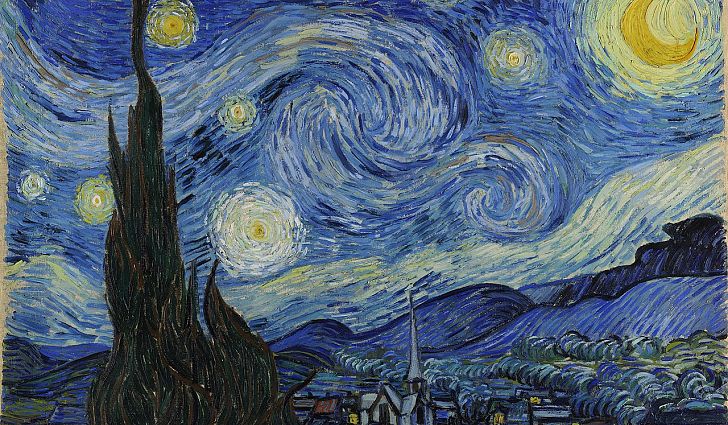
Willem van Gogh 30 March 1853 – 29 July 1890 was a Dutch Post-Impressionist
painter who is among the most famous and influential figures in the history of
Western art. In just over a decade he created about 2,100 artworks, including
around 860 oil paintings, most of them in the last two years of his life. They
include landscapes, still lifes, portraits and self-portraits, and are
characterised by bold colours and dramatic, impulsive and expressive brushwork
that contributed to the foundations of modern art. However, he was not
commercially successful, and his suicide at 37 followed years of mental illness
and poverty.
Born
into an upper-middle-class family, Van Gogh drew as a child and was serious,
quiet and thoughtful. As a young man he worked as an art dealer, often
travelling, but became depressed after he was transferred to London. He turned
to religion and spent time as a Protestant missionary in southern Belgium. He
drifted in ill health and solitude before taking up painting in 1881, having
moved back home with his parents. His younger brother Theo supported him
financially, and the two kept up a long correspondence by letter. His early
works, mostly still lifes and depictions of peasant labourers, contain few
signs of the vivid colour that distinguished his later work. In 1886, he moved
to Paris, where he met members of the avant-garde, including Émile Bernard and
Paul Gauguin, who were reacting against the Impressionist sensibility. As his
work developed, he created a new approach to still lifes and local landscapes.
His paintings grew brighter in colour as he developed a style that became fully
realised during his stay in Arles in the south of France in 1888. During this period,
he broadened his subject matter to include series of olive trees, wheat fields
and sunflowers.
Van Gogh
suffered from psychotic episodes and delusions and though he worried about his
mental stability, he often neglected his physical health, did not eat properly
and drank heavily. His friendship with Gauguin ended after a confrontation with
a razor, when in a rage, he severed part of his own left ear. He spent time in
psychiatric hospitals, including a period at Saint-Rémy. After he discharged
himself and moved to the Auberge Ravoux in Auvers-sur-Oise near Paris, he came
under the care of the homeopathic doctor Paul Gachet. His depression continued
and on 27 July 1890, Van Gogh shot himself in the chest with a revolver. He
died from his injuries two days later.
Van Gogh
was unsuccessful during his lifetime and was considered a madman and a failure.
He became famous after his suicide and exists in the public imagination as the
quintessential misunderstood genius, the artist "where discourses on
madness and creativity converge". His reputation began to grow in the
early 20th century as elements of his painting style came to be incorporated by
the Fauves and German Expressionists. He attained widespread critical,
commercial and popular success over the ensuing decades, and is remembered as
an important but tragic painter, whose troubled personality typifies the
romantic ideal of the tortured artist. Today, Van Gogh's works are among the world's
most expensive paintings to have ever sold at auction, and his legacy is
honoured by a museum in his name, the Van Gogh Museum in Amsterdam, which holds
the world's largest collection of his paintings and drawings.
Noorderplantsoen is an urban public park
in the city of Groningen in the Netherlands, situated slightly north of the
city center. Its name is Dutch for northern public garden.
History
In 1874
the Vestingswet was passed. This law allowed cities to expand outside of the
city walls and fortifications. Since the fortifications were no longer in use,
they were transformed into a public park. The earth ramparts were incorporated
in the park architecture and the moats were turned into ponds. The architecture
is of an English garden style, characterized by meandering paths and serpentine
ponds, inspired by wild nature. The shape of the park still reflects the former
purpose of the area: the long but narrow park curves around the old city. The
park includes an Art Nouveau bandstand and a small restaurant.
Until
the mid-90s the Noorderplantsoen was split up by a busy road, but a referendum
in 1994 decided - with a narrow majority - to close this road for motorized
traffic.
Events
Every
year a number of events take place in the Noorderplantsoen, of which the
Noorderzon Theater Festival is well known. This cultural event takes place at
the end of August and is visited by over 125,000 visitors. Many theater, dance
and music groups from The Netherlands and abroad perform during this 11-day
festival.
Another
well-known event in the Noorderplantsoen is the plantsoenloop. This run through
the park is held annually in October or early November and attracts about 500
runners. In 2007 the 50th edition of the plantsoenloop took place.
Thursday 23 August
2018, we have our next topic event given on River Island and is all about The
Netherlands. We have DJ Trees and Artist Angel with a performance of Andre
Hazes.
There are several posts on this blog about The Netherlands, Holland and the Dutch people.
All credits are for
Deepert who did the organization of this event!!
André
Hazes
André
Gerardus "André" Hazes (30 June 1951 – 23 September 2004) was a Dutch
singer in a genre called levenslied ("song about life"), popular
music about everyday life sung in the Dutch language. André Hazes was one of
the most successful singers in this genre. Hazes recorded 31 studio and live
albums and he released 55 singles.
André
Hazes was both a cult figure and a very successful mainstream pop artist. He
earned both reputations by being the most successful baby boom generation
interpreter of "het levenslied" -- the Dutch equivalent of American
country songs or the French chanson. "Het levenslied" (the life song)
evokes the lives of ordinary people in simple and recognizable terms, often
with a melodramatic touch. Hazes rose to fame in the 1970s, with hit songs like
"Eenzame Kerst" and "De Vlieger." He secured his mainstream
success well into the '80s, and although he was obscured somewhat in the 1990s,
Hazes returned to the spotlight in 1999, staying there until his early and
unfortunate death in 2004.
André
Hazes was born in Amsterdam on June 30, 1951, in the working-class neighborhood
of De Pijp. He fell in love with music -- especially rock & roll and the
blues -- at an early age.
Albert Cuyp markt. Amsterdam, Nederland, 22 oktober 1959
When he was only eight years old, André was
discovered by Johnny Kraaykamp, Sr., shortly after which his single
"Droomschip" was released, but it failed to bring success. Sometimes,
lightning does strike twice, because in 1976 -- when Hazes was 26 years old --
he was discovered again, this time by no less than Willy Alberti. Up until
then, Hazes had gone through a string of jobs: from factory worker to market
salesman. Alberti ensured the release of the single "Eenzame Kerst"
during the Christmas season of 1976. Hazes' first full-length studio album,
entitled Zo Is Het Leven, followed in the summer of 1977, to positive reviews
and good sales. Frustration and tension with his record label, however, kept
Hazes away from recording and the music industry for the next few years. Among
other things, he worked as a bartender. He returned to the recording and
performing fold in 1980 -- with the help of producer Tim Griek, Hazes released
a single "'N Vriend" and a studio album of the same name. 'N Vriend's
successor, Gewoon André, reached the top of the album charts a year later.
The
single "Een Beetje Verliefd" became Hazes' ticket to superstardom.
For Hazes, the '80s were marked by over 20 hit singles and more than a dozen
successful studio albums, as well as sold-out shows, live albums, and his own
(although short-run) television series. In May 1988, Hazes' friend and producer
Tim Griek died. Later that year the Dutch football team won the European Championship,
and Hazes released a single, recorded with the team, entitled "Wij Houden
Van Oranje."
The song grew into a national sports anthem. At the end of
the '80s, Hazes recorded and released Dit Is Wat Ik Wil, a collection of blues
originals and covers of Dutch and English-language origin. Among them was a
version of "The Thrill Is Gone" with Brainbox's Kaz Lux and
"What'd I Say" with Herman Brood. With two new producers, Hazes kept
his production pace high in the 1990s -- delivering at least one new studio
album per year -- but signs of wear, both artistically and in his audience,
were beginning to show (though his sales consolidated and never dropped below
respectable levels).
Even
more importantly, Hazes' lifestyle, consisting of many shows a year and a lot
of drinking, was beginning to take its toll. Hazes was never in the best
physical shape, but at the end of the '90s he had become seriously overweight
and began experiencing heart problems. After filmmaker René Appel made a
documentary about him, Hazes' star rose to national fame once again: Zij
Gelooft In Mij showed Hazes in all his fragility -- both as a performer and as
a husband and a father. His next three albums all made the Top Three of the
album charts, and the compilation 25 Jaar: Het Allerbeste Van reached the
number one position and eventually spent over two years in the album charts. In
2003, Hazes celebrated his silver anniversary as a performer with a concert in
the Amsterdam Arena, immortalized with the DVD Live in de Amsterdam Arena.
In May
2004, Hazes announced that he had hearing problems; as a result, he had to
cancel his concerts. Four months later, on the 21st of September, Hazes was
rushed to a hospital. He died two days later as a result of two strokes and
cardiac arrest. Hazes was given a farewell ceremony in the Amsterdam Arena on
September 27, with more than 48,000 people present. Over six million people
from the Netherlands and Belgium watched the service. Several Dutch celebrities
spoke and/or performed that night -- among them were Trijntje Oosterhuis, René
Froger, and Guus Meeuwis -- and Hazes' band played Gary Moore's "Still Got
the Blues." Though some argue that the evening was over the top (and
perhaps rightly so), Hazes' farewell ceremony stressed his special status as a
performer; not merely loved for his music, he was also adored for being himself
-- a plain and ordinary yet special person and performer. Hazes' single
"Zij Gelooft In Mij" was re-released two days later. It became his
fifth number one single (others were "Eenzame Kerst,""Diep In
Mijn Hart,""Ik Meen 't," and "Wij Houden Van
Oranje").
A year
after his death, on September 23, 2005, Hazes' ashes were shot into the sky.
That same day, a statue was uncovered at the Albert Cuyp market in Amsterdam,
the place where Hazes was first discovered. After his death, Hazes scored
several more hits -- some of them posthumous duets with contemporary artists
such as Gerard Joling and his son André Jr. An album of these duets, Samen Met
Dré, was released in 2007. It reached the number one slot not long thereafter,
staying there for three weeks.
November
11th is also known as Martinmas and celebrates, Martin of Tours. Martin was born in Hungary and educated in
Italy in the late 4th century. He became
a Roman Army soldier for Constantine. While stationed in Amiens, France, he
found a beggar dying of the cold in a snowstorm. Martin slashed his cloak in
half with his sword and gave it to the man to keep him warm. Legend has it that
Christ appeared to him in a dream wearing this same garment, causing Martin to
convert. He became a monk and led a peaceful life, and he was known to be kind
to the sick and the poor. He is the Patron Saint of Beggars, Drunkards,
Innkeepers, Equestrians, Harvests, Horses, the Military, New Wine, and Tailors.
Sint
Maarten | Saint Martin
Halloween,
despite its roots in Scotland and Ireland (Samhain), Halloween is a
distinctly American tradition. The celebration of Halloween is a
special day for light-hearted, community-sanctioned mischief, totally devoid of
meaning and the best example of runaway consumerism.
While
Halloween has taken over England, it still hasn’t reached the Netherlands.
Outside the American expat sanctuaries of Amsterdam, Den Haag, and Utrecht,
Halloween is simply another day. In the Netherlands we celebrate the Dutch
tradition of Saint Martin (Sint Maarten of Tours). The two celebrations are
actually quite similar under the premise that it’s a children’s holiday involving
going door-to-door and receiving special treats or sweets.
Saint
Martin is regarded as a friend of the children and patron of the poor in
the Catholic tradition. November 11 is the day that Saint Martin passed
away. Saint Martin’s day is traditionally an old harvest festival that is
celebrated in many European countries and precedes the fasting period of
Advent, which begins on November 12.
Part of the
celebration involves an informal parade of hand-crafted, or store-bought
lanterns made out of paper as children go around the neighbourhood, door to
door.
Traditionally,
children’s lanterns were made of hollowed out sugar beets or turnips hanging on
a string tied to a wooden stick. Now children often decorate their own paper
lanterns at school, or purchase it at the local grocery store. As soon as
the sun sets, which often feels like around 4:30 p.m., small groups of Dutch
children make processions around their neighbourhoods with their lanterns.
There’s
something romantic and nostalgic about seeing little children with little paper
latterns going door-to-door and lighting up the dark, cold “winter” night. The
“11th day of the 11th month” after all, is traditionally considered to be the
first day of “winter” according to the agricultural calendar.
The real city banner, in use since the
citizens
of Utrecht presented it on 5 May 1956,
does have the image of St.
Martin.
Have you
ever taken the time to look at the coat of arms and the city flag of Utrecht?
Did you know that it was made in honor of Saint Martin, the patron saint of Utrecht?
The red part is the Roman coat and the white part is the undergarment of Saint
Martin.
Sint
Maarten is practiced only a handful of pockets in the Low Countries –
traditionally in Utrecht, Limburg, Noord-Holland, Groningen, Friesland, Drenthe
and Noord Brabant. Perhaps it’s about time that the Dutch embrace this
beautiful tradition as an entire country.
Fast food is a type of mass-produced food that is
prepared and served very quickly. The food is typically less nutritionally
valuable compared to other foods and dishes. While any meal with low
preparation time can be considered fast food, typically the term refers to food
sold in a restaurant or store with preheated or precooked ingredients, and
served to the customer in a packaged form for take-out/take-away.
Fast food restaurants are traditionally distinguished
by their ability to serve food via a drive-through. Outlets may be stands or
kiosks, which may provide no shelter or seating, or fast food restaurants (also
known as quick service restaurants). Franchise operations that are part of
restaurant chains have standardized foodstuffs shipped to each restaurant from
central locations.
Fast food began with the first fish and chip shops in
Britain in the 1860s. Drive-through restaurants were first popularized in the
1950s in the United States. The term "fast food" was recognized in a
dictionary by Merriam–Webster in 1951.
According to the National Institutes of Health (NIH),
fast foods are quick alternatives to home-cooked meals. They are also high in
saturated fat, sugar, salt and calories. Eating too much fast food has been
linked to, among other things, colorectal cancer, obesity and high cholesterol.
The traditional family dinner is increasingly being
replaced by the consumption of takeaway, or eating "on the run". As a
result, the time invested on food preparation is getting lower and lower, with
an average couple in the United States spending 47 minutes and 19 seconds per
day on food preparation in 2013.
History
The concept of ready-cooked food for sale is closely
connected with urban development. Homes in emerging cities often lacked
adequate space or proper food preparation accouterments. Additionally,
procuring cooking fuel could cost as much as purchased produce. Frying foods in
vats of searing oil proved as dangerous as it was expensive, and homeowners
feared that a rogue cooking fire "might easily conflagrate an entire
neighborhood". Thus, urbanites were encouraged to purchase pre-prepared
meats or starches, such as bread or noodles, whenever possible. In Ancient
Rome, cities had street stands - a large counter with a receptacle in the
middle from which food or drink would have been served. It was during post-WWII
American economic boom that Americans began to spend more and buy more as the
economy boomed and a culture of consumerism bloomed. As a result of this new
desire to have it all, coupled with the strides made by women while the men
were away, both members of the household began to work outside the home. Eating
out, which had previously been considered a luxury, became a common occurrence,
and then a necessity. Workers, and working families, needed quick service and
inexpensive food for both lunch and dinner. This need is what drove the
phenomenal success of the early fast food giants, which catered to the family
on the go (Franklin A. Jacobs). Fast food became an easy option for a busy
family, as is the case for many families today.
Fast food in the Netherlands
Patat speciaal and Frikandel speciaal
The Dutch have their own types of fast food. A Dutch
fast food meal often consists of a portion of french fries (called friet or
patat) with a sauce and a meat product. The most common sauce to accompany
french fries is fritessaus. It is a sweet, vinegary and low fat mayonnaise
substitute, that the Dutch nevertheless still call "mayonnaise". When
ordering it is very often abbreviated to met (literally "with").
Other popular sauces are ketchup or spiced ketchup ("curry"),
Indonesian style peanut sauce ("satésaus" or "pindasaus")
or piccalilli. Sometimes the fries are served with combinations of sauces, most
famously speciaal (special): mayonnaise, with (spiced) ketchup and chopped
onions; and oorlog (literally "war"): mayonnaise and peanut sauce
(sometimes also with ketchup and chopped onions). The meat product is usually a
deep fried snack; this includes the frikandel (a deep fried skinless minced
meat sausage), and the kroket (deep fried meat ragout covered in breadcrumbs).
New Zealand
(Māori: Aotearoa) is an island nation in the southwestern Pacific Ocean. The
country geographically comprises two main landmasses—that of the North Island,
or Te Ika-a-Māui, and the South Island, or Te Waipounamu—and numerous smaller
islands. New Zealand is situated some 1,500 kilometres (900 mi) east of
Australia across the Tasman Sea and roughly 1,000 kilometres (600 mi) south of
the Pacific island areas of New Caledonia, Fiji, and Tonga. Because of its
remoteness, it was one of the last lands to be settled by humans. During its
long period of isolation, New Zealand developed a distinct biodiversity of animal,
fungal and plant life. The country's varied topography and its sharp mountain
peaks, such as the Southern Alps, owe much to the tectonic uplift of land and
volcanic eruptions. New Zealand's capital city is Wellington, while its most
populous city is Auckland.
Sometime between
1250 and 1300 CE, Polynesians settled in the islands that later were named New
Zealand and developed a distinctive Māori culture. In 1642, Dutch explorer Abel
Tasman became the first European to sight New Zealand. In 1840, representatives
of Britain and Māori chiefs signed the Treaty of Waitangi, which declared
British sovereignty over the islands. In 1841, New Zealand became a colony
within the British Empire and in 1907 it became a Dominion. Today, the majority
of New Zealand's population of 4.7 million is of European descent; the
indigenous Māori are the largest minority, followed by Asians and Pacific
Islanders. Reflecting this, New Zealand's culture is mainly derived from Māori
and early British settlers, with recent broadening arising from increased
immigration. The official languages are English, Māori and New Zealand Sign
Language, with English predominant.
New Zealand is a
developed country and ranks highly in international comparisons of national
performance, such as health, education, economic freedom and quality of life.
Since the 1980s, New Zealand has transformed from an agrarian, regulated
economy to a market economy. Nationally, legislative authority is vested in an
elected, unicameral Parliament, while executive political power is exercised by
the Cabinet, led by the Prime Minister, who is currently Bill English. Queen
Elizabeth II is the country's head of state and is represented by a
governor-general. In addition, New Zealand is organized into 11 regional councils
and 67 territorial authorities for local government purposes. The Realm of New
Zealand also includes Tokelau (a dependent territory); the Cook Islands and
Niue (self-governing states in free association with New Zealand); and the Ross
Dependency, which is New Zealand's territorial claim in Antarctica. New Zealand
is a member of the United Nations, Commonwealth of Nations, ANZUS, Organization
for Economic Co-operation and Development, Pacific Islands Forum, and
Asia-Pacific Economic Cooperation.
Birds in New Zealand
Kiwi
Kiwi is a
flightless bird native to New Zealand, in the genus Apteryx and family Apterygidae.
At around the size of a domestic chicken, kiwi is by far the smallest living
ratites (which also consist of ostriches, emus, rheas, and cassowaries), and
lay the largest egg in relation to their body size of any species of bird in
the world. DNA sequence comparisons have yielded the surprising conclusion that
kiwi is much more closely related to the extinct Malagasy elephant birds than
to the moa with which they shared New Zealand. There are five recognized
species, two of which are currently vulnerable, one of which is endangered, and
one of which is critically endangered. All species have been negatively
affected by historic deforestation but currently the remaining large areas of
their forest habitat are well protected in reserves and national parks. At
present, the greatest threat to their survival is predation by invasive
mammalian predators.
The kiwi is a
national symbol of New Zealand, and the association is so strong that the term
Kiwi is used internationally as the colloquial demonym for New Zealanders.
Kea
The kea (Māori:
[kɛ.a]; Nestor notabilis) is a large species of parrot of the family
Strigopidae found in forested and alpine regions of the South Island of New
Zealand. About 48 cm (19 inch) long, it is mostly olive-green with a brilliant
orange under its wings and has a large, narrow, curved, grey-brown upper beak.
The kea is the world's only alpine parrot. Its omnivorous diet includes
carrion, but consists mainly of roots, leaves, berries, nectar, and insects.
Now uncommon, the kea was once killed for bounty due to concerns by the
sheep-farming community that it attacked livestock, especially sheep. It received
full protection in 1986.
The kea nests in
burrows or crevices among the roots of trees. Kea are known for their
intelligence and curiosity, both vital to their survival in a harsh mountain
environment. Kea can solve logical puzzles, such as pushing and pulling things
in a certain order to get to food, and will work together to achieve a certain
objective. They have been filmed preparing and using tools.
Haka (sports)
A haka is a
traditional ancestral war cry, dance or challenge of the Māori people of New
Zealand which the New Zealand national rugby union team, the "All
Blacks", and several other New Zealand national teams perform before their
international matches. Some non-New Zealand sports teams have also adopted the
haka.
The All Blacks
are believed to have first performed the "Ka Mate" haka in 1906. It
is said that this Haka was composed by Te Rauparaha of Ngāti Toa to commemorate
his escape from death during an incident in 1810. Chased by his enemies, he hid
in a food-storage pit under the skirt of a woman. He climbed out to find
someone standing over him, who, instead of killing Te Rauparaha, turned out to
be another chief friendly to him. In relief, Te Rauparaha performed this
ancient haka, which had been performed all through Aotearoa for centuries. The
story of Te Rauparaha was merely woven into several older stories about this
haka.
A park is an area of natural, semi-natural, or planted
space set aside for human enjoyment and recreation or for the protection of
wildlife or natural habitats. It may consist of grassy areas, rocks, soil, and
trees, but may also contain buildings and other artifacts such as monuments,
fountains or playground structures. In North America, many parks have fields
for playing sports such as soccer, baseball and football, and paved areas for
games such as basketball. Many parks have trails for walking, biking and other
activities. Some parks are built adjacent to bodies of water or watercourses,
and these parks may comprise a beach or boat dock area. Often, the smallest
parks are in urban areas, where a park may take up only a city block or less.
Urban parks often have benches for sitting and they may contain picnic tables
and barbecue grills. Parks have differing rules regarding whether dogs can be
brought into the park: some parks prohibit dogs; some parks allow them with restrictions
(e.g., use of a leash); and some parks, which may be called "dog parks,"
permit dogs to run off-leash.
The largest parks can be vast natural areas of hundreds
of thousands of square kilometers (thousands of square miles), with abundant
wildlife and natural features such as mountains and rivers. In many large
parks, camping in tents is allowed with a permit. Many natural parks are
protected by law, and users may have to follow restrictions (e.g., rules
against open fires or bringing in glass bottles). Large national and
sub-national parks are typically overseen by a park ranger or a park warden.
Large parks may have areas for canoeing and hiking in the warmer months and, in
some northern hemisphere countries, cross-country skiing and snowshoeing in
colder months.
Noorderplantsoen
Noorderplantsoen is an urban public park in the city of
Groningen in the Netherlands, situated slightly north of the city center. Its
name is Dutch for northern public garden.
History
In 1874 the Vestingswet was passed. This law allowed
cities to expand outside of the city walls and fortifications. Since the
fortifications were no longer in use, they were transformed into a public park.
The earth ramparts were incorporated in the park architecture and the moats
were turned into ponds. The architecture is of an English garden style,
characterized by meandering paths and serpentine ponds, inspired by wild
nature. The shape of the park still reflects the former purpose of the area:
the long but narrow park curves around the old city. The park includes an Art
Nouveau bandstand and a small restaurant.
Until the mid-90s the Noorderplantsoen was split up by a
busy road, but a referendum in 1994 decided - with a narrow majority - to close
this road for motorized traffic.
Events
Every year a number of events take place in the
Noorderplantsoen, of which the Noorderzon Theater Festival is well known. This
cultural event takes place at the end of August and is visited by over 125,000
visitors. Many theater, dance and music groups from The Netherlands and abroad
perform during this 11-day festival.
Another well-known event in the Noorderplantsoen is the
plantsoenloop. This run through the park is held annually in October or early
November and attracts about 500 runners. In 2007 the 50th edition of the
plantsoenloop took place.
The statue of Joost van den Vondel in the late 19th
century
Vondelpark
The Vondelpark is a public urban park of 47 hectares (120
acres) in Amsterdam, Netherlands. It is part of the borough of Amsterdam-Zuid
and situated west from the Leidseplein and the Museumplein. The park was opened
in 1865 and originally named the "Nieuwe Park", but later renamed to
"Vondelpark", after the 17th-century playwright and poet Joost van
den Vondel. Yearly, the park has around 10 million visitors. In the park is an
open-air theatre, a playground and several horeca* facilities.
*Horeca (or HORECA) is an abbreviation used in Europe
for the sector of the food industry that consists of establishments which
prepare and serve food and beverages (food service). The term is a syllabic
abbreviation of the words Hotel/Restaurant/Café.
The Dutch
Top 40 (Dutch: Nederlandse Top 40) is a weekly music chart compiled by
Stichting Nederlandse Top 40. It started as a radio program titled
"Veronica Top 40", on the offshore station Radio Veronica in 1965. It
remained "The Veronica Top 40" until 1974, when the station was
forced to stop broadcasting. Joost den Draaijer was the initiator of the top 40
in the Netherlands.
History
On January 2, 1965, the first Top 40 was compiled, with
its first #1 hit "I Feel Fine" by The Beatles. In 1974, the Stichting
Nederlandse Top 40 bought the Top 40 and named it De Nederlandse Top 40. The
Dutch Top 40 is one of the three official charts in the Netherlands, the other
two being the Single Top 100, which is based entirely on sales and the Mega Top
50 (3FM) which, like the Dutch Top 40, includes sales and airplay data.
Currently, Radio 538 is airing the Dutch Top 40 on radio.
Jeroen Nieuwenhuize presents the program every Friday afternoon from 14.00
until 18.00. This week in the Dutch Top 40
Mellow Yellow was
the first coffeeshop in Amsterdam. In 1972 squatters occupied a former bakery
on the Weesperzijde 53 in Amsterdam. There was much hash dealt, joint smoked en
tea drunken that they decicded in 1973 to make it a Tea House, also because
there was no license or diploma required.
The shop was named after "Mellow Yellow", a song by Donovan in which he sings
about smoking banana peel with the intention to be high. The intent of the
shop was to sell cannabis, despite this being illegal at the time of its creation.
Sales were originally disguised by drug dealers seated at the bar posing as
customers selling in plastic bags pre-packaged hash and weed.
Mellow Yellow was
unsuccessfully raided by police several times. Unpackaged cannabis, bought from
wholesalers including drug lord Klaas Bruinsma, was hidden behind secret doors
and shutters.
In 1975, the
concept was adopted by a shop named Russia situated on the same street as
Mellow Yellow and was followed by another coffee shop called The Bulldog.
In 1978, after a fire,
Mellow Yellow closed its doors.
In 2014, there is
still be a Mellow Yellow-coffeeschop in Amsterdam (Vijzelgracht 33), but this
has nothing to do with the shop on the Weesperzijde.
The Dutch
celebrate Halloween on the 11th of November instead of the 31st of October. The
kids go door to door just like the US, except, they wear no
costumes. And instead of saying trick or treat, they sing songs for candy, at
all of their neighbors.
But why on
November 11th?
It's not
called Halloween in Holland, but St. Martin (Sint Maarten).
It was a
dark and stormy night. Martin was quite alone on that dark stormy night. He
only had a cloak and a singular piece of bread. He was returning home when
suddenly a poor and homeless man appeared in the darkness. Martin felt pity for
the man and gave him half his piece of bread, and half his cloak and offered
him hospitality in his home.
Now he is called St Martin and is known for his kindness to
the stranger.
That is why we celebrate Saint Martin's Day.
Saint
Martin's
Day, November 11th, is a celebration in Holland very much like
"trick-or-treat" in England and the US. Kids in Holland go around (often with a parent) getting
treats by ringing on doorbells singing songs for which they are given sweets or
tangerines.
They go around with lanterns and here is one of the songs they sing:
Elf November is de dag,
Dat mijn lichtje,
Dat mijn lichtje.
Elf November is de dag,
Dat mijn lichtje branden mag.
I did get a
few Halloween cards in Second Life. Thank you my friends.