Showing posts with label History. Show all posts

Thursday, February 17, 2022

THE PHONOGRAPH

On February 19, 1878, Thomas Edison received a patent for the phonograph.
The photo shows Thomas Edison with his patented phonograph.The device could mechanically record and reproduce sound. In its later forms, the device was called gramophone. While other inventors had produced devices that could record sounds, Edison’s phonograph was the first to be able to reproduce the recorded sound.

The sound vibration waveforms are recorded as corresponding physical deviations of a spiral groove engraved, etched, incised, or impressed into the surface of a rotating cylinder or disc, called a “record”. To recreate the sound, the surface is similarly rotated while a playback stylus traces the groove and is therefore vibrated by it, very faintly reproducing the recorded sound. In early acoustic phonographs, the stylus vibrated a diaphragm which produced sound waves which were coupled to the open air through a flaring horn, or directly to the listener’s ears through stethoscope-type earphones.

The phonograph allowed people to listen to whatever music they wanted, when they wanted, where they wanted, and for as long as they wanted. People began listening to music differently, people could now analyze lyrics in depth. The phonograph was also instrumental in the development of jazz.

Friday, January 21, 2022

WORKING IN THE MINE

United Mine Workers
The United Mine Workers of America (UMW or UMWA) is a North American labor union best known for representing coal miners. Today, the Union also represents health care workers, truck drivers, manufacturing workers and public employees in the United States and Canada. Although its main focus has always been on workers and their rights, the UMW of today also advocates for better roads, schools, and universal health care. By 2014, coal mining had largely shifted to open pit mines in Wyoming, and there were only 60,000 active coal miners. The UMW was left with 35,000 members, of whom 20,000 were coal miners, chiefly in underground mines in Kentucky and West Virginia. However, it was responsible for pensions and medical benefits for 40,000 retired miners, and for 50,000 spouses and dependents.


The UMW was founded in Columbus, Ohio, on January 22, 1890, with the merger of two old labor groups, the Knights of Labor Trade Assembly No. 135 and the National Progressive Miners Union. Adopting the model of the American Federation of Labor (AFL), the union was initially established as a three-pronged labor tool: to develop mine safety; to improve mine workers' independence from the mine owners and the company store; and to provide miners with collective bargaining power.

When I was reading more about mining, I found this:

Hurrying
A hurrier, also sometimes called a coal drawer or coal thruster, was a child or woman employed by a collier to transport the coal that they had mined. Women would normally get the children to help them because of the difficulty of carrying the coal. Common particularly in the early 19th century, the hurrier pulled a corf (basket or small wagon) full of coal along roadways as small as 0.4 metres (16 in) in height. They would often work 12-hour shifts, making several runs down to the coal face and back to the surface again.

Some children came from the workhouses and were apprenticed to the colliers. Adults could not easily do the job because of the size of the roadways, which were limited on the grounds of cost and structural integrity. Hurriers were equipped with a "gurl" belt – a leather belt with a swivel chain linked to the corf. They were also given candles as it was too expensive to light the whole mine.

Working conditions
Workers in coal mines were naked due to the heat and the narrow tunnels that would catch on clothing. Men and boys worked completely naked, while women and girls would generally strip to the waist; but in some mines might be naked also. In testimony before a Parliamentary commission, it was stated that working naked in confined spaces "... it is not to be supposed but that where opportunity thus prevails sexual vices are of common occurrence."

Legislation
In August 1842 the Children's Employment Commission drew up an act of Parliament which gave a minimum working age for boys in mines, though the age varied between districts and even between mines. The Mines and Collieries Act 1842 also outlawed the employment of women and girls in mines. In 1870 it became compulsory for all children aged between five and thirteen to go to school, ending much of the hurrying. It was still a common profession for school leavers well into the 1920s.

Source Wikipedia

Friday, August 23, 2019

Famous Women in History

Women have always played an important role in society and have greatly influenced history. Since ancient times women have been leaders of groups of people, maintained peace, inspired wars, made discoveries and changed the lives of others. To come up with a comprehensive list of all women that have shaped our world would be impossible, but here are some great names that should not be forgotten:
Cleopatra – A great leader who served as the last active pharaoh of Egypt.
Boudicca – As inspirational Briton leader who led several tribes in a revolution against the Romans.
Joan of Arc – She became France’s patron saint after leading France to victory at a young age of only 17.
Queen Isabella of Spain  Patron to Christopher Columbus, her influence made his discovery of America possible.
Marie Curie – Discovered radioactivity and radium. She was the first woman to have won a Nobel Prize
Anne Frank – Hardly a woman yet, this young writer became the world’s most famous victim of the Holocaust. Her diary left one of the most complete accounts of what life was like for the Jews while hiding from the Germans.
Susan B. Anthony – The first woman to attempt to vote in the U.S. who was arrested for fighting for this right.
Mother Theresa – A global icon for helping the poor. Her Missionary of Charities organization helped thousands of people in Calcutta who were sick and dying.
Rosa Parks – Her refusal to give up a bus seat sparked protests in that finally led to the abolishment of racial segregation in America.


Friday, August 16, 2019

Rebuilding River Island part II

One day I made the decision that the two cities had to become ONE and that I had to remove the old city and make a new one. There is second reason why I wanted to rebuild the city. I will tell you that in the next post.

It was not easy to destroy something what I had build. But some buildings are old and made with prims and there are even some slow rezzing sculpty parts. My idea was to make snapshots of all parts the old city. I think for my own memories. If you never been there you would not miss it.
The entrance of the old city at night. 
And at day light.
The shoe shop.
Stairs to the barber shop.
I love that guitar playing guy. He will return in the new city.
The Tailor
The Cheese Shop
Some criminals rented the place above the cheese shop.
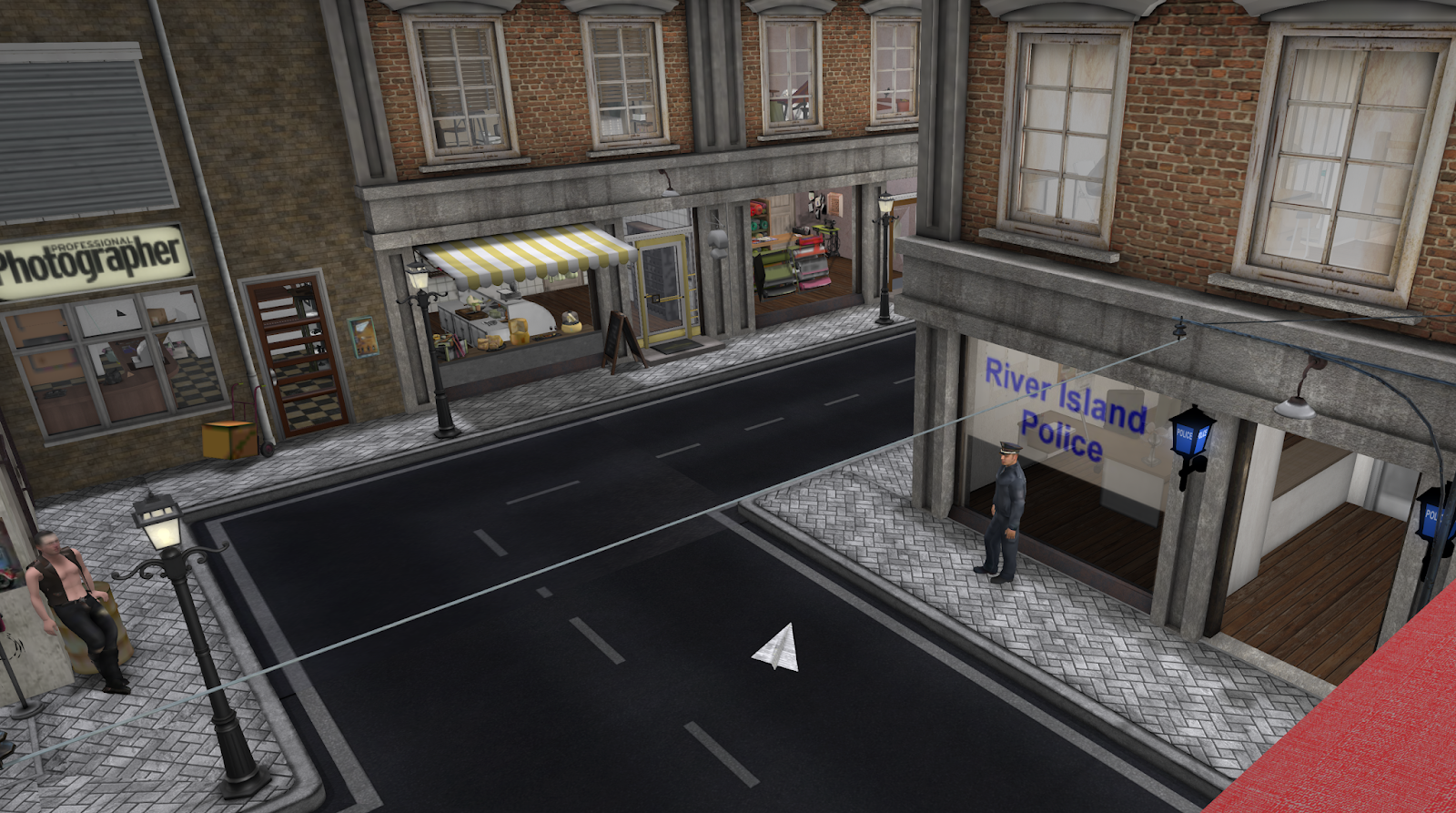
The Police Station
Overview
Sushi stand
Photographer Shop
This last picture shows how much trouble I got to place items in and keep it accessible and look as in real
                                                          All these parts are been removed!
to be continued

Saturday, August 3, 2019

Cretaceous

The Cretaceous is a geologic period and system that spans from the end of the Jurassic Period 145 million years ago to the beginning of the Paleogene Period 66 million years ago. It is the last period of the Mesozoic Era, and the longest period of the Phanerozoic Eon. The Cretaceous Period is usually abbreviated K, for its German translation Kreide (chalk, creta in Latin).

The Cretaceous was a period with a relatively warm climate, resulting in high eustatic sea levels that created numerous shallow inland seas. These oceans and seas were populated with now-extinct marine reptiles, ammonites and rudists, while dinosaurs continued to dominate on land. During this time, new groups of mammals and birds, as well as flowering plants, appeared.

The Cretaceous (along with the Mesozoic) ended with the Cretaceous–Paleogene extinction event, a large mass extinction in which many groups, including non-avian dinosaurs, pterosaurs and large marine reptiles died out. The end of the Cretaceous is defined by the abrupt Cretaceous–Paleogene boundary, a geologic signature associated with the mass extinction which lies between the Mesozoic and Cenozoic eras.

New Dinosaurs
Though dinosaurs ruled throughout the Cretaceous, the dominant groups shifted and many new types evolved. Sauropods dominated the southern continents but became rare in the north. Herd-dwelling ornithischians like Iguanodon spread everywhere but Antarctica. Toward the close of the Cretaceous, vast herds of horned beasts such as Triceratops munched cycads and other low-lying plants on the northern continents. The carnivore Tyrannosaurus rex dominated the late Cretaceous in the north while monstrous meat-eaters like Spinosaurus, which had a huge sail-like fin on its back, thrived in the south. Smaller carnivores likely battled for the scraps.

Thursday, July 11, 2019

PIZZA

Pizza is a savory dish of Italian origin, consisting of a usually round, flattened base of leavened wheat-based dough topped with tomatoes, cheese, and various other ingredients (anchovies, olives, meat, etc.) baked at a high temperature, traditionally in a wood-fired oven. In formal settings, like a restaurant, pizza is eaten with knife and fork, but in casual settings it is cut into wedges to be eaten while held in the hand. Small pizzas are sometimes called pizzettas

The term pizza was first recorded in the 10th century in a Latin manuscript from the Southern Italian town of Gaeta in Lazio, on the border with Campania. Modern pizza was invented in Naples, and the dish and its variants have since become popular in many countries. It has become one of the most popular foods in the world and a common fast food item in Europe and North America, available at pizzerias (restaurants specializing in pizza), restaurants offering Mediterranean cuisine, and via pizza delivery. Many companies sell ready-baked frozen pizzas to be reheated in an ordinary home oven. 

The Associazione Verace Pizza Napoletana (lit. True Neapolitan Pizza Association) is a non-profit organization founded in 1984 with headquarters in Naples that aims to promote traditional Neapolitan pizza. In 2009, upon Italy's request, Neapolitan pizza was registered with the European Union as a Traditional Speciality Guaranteed dish, and in 2017 the art of its making was included on UNESCO's list of intangible cultural heritage. 

History
Foods similar to pizza have been made since the Neolithic Age. Records of people adding other ingredients to bread to make it more flavorful can be found throughout ancient history. In the 6th century BC, the Persian soldiers of Achaemenid Empire during the rule King Darius I baked flatbreads with cheese and dates on top of their battle shields and the ancient Greeks supplemented their bread with oils, herbs, and cheese. An early reference to a pizza-like food occurs in the Aeneid, when Celaeno, queen of the Harpies, foretells that the Trojans would not find peace until they are forced by hunger to eat their tables (Book III). In Book VII, Aeneas and his men are served a meal that includes round cakes (like pita bread) topped with cooked vegetables. When they eat the bread, they realize that these are the "tables" prophesied by Celaeno.

Thursday, July 4, 2019

National Fried Chicken Day

National Fried Chicken Day is observed in the United States of America annually on July 6. It is unclear how the day originated. In observance of the day, fried chicken is prepared in a variety of ways, and eaten.

Some chain fried chicken restaurants such as Church's Chicken and KFC, and other chain restaurants such as Grandy's, offer promotions on National Fried Chicken Day.

Fried Chicken
Southern fried chicken, also known simply as fried chicken, is a dish consisting of chicken pieces which have been coated in a seasoned batter and pan-fried, deep fried, or pressure fried. The breading adds a crisp coating or crust to the exterior of the chicken while retaining juices in the meat. Broiler chickens are most commonly used.
The first dish known to have been deep fried was fritters, which were popular in the European Middle Ages. However, it was the Scottish who were the first Europeans to deep fry their chicken in fat (though without seasoning). Meanwhile, several West African peoples had traditions of seasoned fried chicken (though battering and cooking the chicken in palm oil). Scottish frying techniques and West African seasoning techniques were combined by enslaved Africans and African-Americans in the American South.

History
The Roman cookbook of Apicius (4th century) has a recipe for deep-fried chicken called Pullum Frontonianum.
The American English expression "fried chicken" is first recorded in the 1830s, and frequently appears in American cookbooks of the 1860s and 1870s. The origin of fried chicken in the southern states of America has been traced to precedents in Scottish and West African cuisine. Scottish fried chicken was cooked in fat (though unseasoned) while West African fried chicken was seasoned (but battered and cooked in palm oil). Scottish frying techniques and African seasoning techniques were used in the American South by African slaves. Fried chicken provided some means of independent economy for enslaved and segregated African-American women, who became noted sellers of poultry (live or cooked) as early as the 1730s. Because of this and the expensive nature of the ingredients, it was, despite popular belief, a rare dish in the African-American community reserved (as in Africa) for special occasions.

Friday, May 10, 2019

Academy of Motion Picture Arts and Sciences

The Academy of Motion Picture Arts and Sciences (AMPAS (often pronounced am-pas); also known as simply the Academy or the Motion Picture Academy) is a professional honorary organization with the stated goal of advancing the arts and sciences of motion pictures. The Academy's corporate management and general policies are overseen by a Board of Governors, which includes representatives from each of the craft branches.

The roster of the Academy's approximately 6,000 motion picture professionals is a "closely guarded secret". While the great majority of its members are based in the United States, membership is open to qualified filmmakers around the world.

The Academy is known around the world for its annual Academy Awards, now officially and popularly known as "The Oscars".

The notion of the Academy of Motion Pictures Arts and Sciences (AMPAS) began with Louis B. Mayer, head of Metro-Goldwyn-Mayer (MGM). Mayer gathered up a group of thirty-six people involved in the film industry and invited them to a formal banquet at the Ambassador Hotel in Los Angeles on January 11, 1927. That evening Mayer presented to those guests what he called the International Academy of Motion Picture Arts and Sciences
Everyone in the room that evening became a founder of the Academy. Between that evening and when the official Articles of Incorporation for the organization were filed on May 4, 1927, the "International" was dropped from the name, becoming the "Academy of Motion Picture Arts and Sciences".
Several organizational meetings were held prior to the first official meeting held on May 6, 1927. Their first organizational meeting was held on May 11.

Best Original Song
1934 - The Continental, Best Original Song (First Academy Award)

2019 Lady Gaga, Bradley Cooper - Shallow (A Star Is Born)

Friday, May 3, 2019

NEOLITHIC DECOR & NEOLITHIC PARTY

Deepert had the idea to do a prehistoric event. It finally became a event about the neolithic (please read the past posts about neolithic, if you not already did, if you want to know more about that era).
Deepert started to build and here are some snapshots when it was finished. 
Deepert thought it would be funny to make some mine tunnels were people had to find there way to the event. It is unsure how much guests still are lost and wandering through those tunnels to find there way out.
 At the end of the tunnel I placed some auroch cows from that period made by: Ancient Designs
The aurochs, also known as urus or ure (Bos primigenius), is an extinct species of large wild cattle that inhabited Europe, Asia, and North Africa. It is the ancestor of domestic cattle; it has also been suggested as an ancestor genetically to the modern European bison, which have been crossbred with steppe bison. The species survived in Europe until 1627, when the last recorded aurochs died in the Jaktorów Forest, Poland.

During the Neolithic Revolution, which occurred during the early Holocene, at least two aurochs domestication events occurred: one related to the Indian subspecies, leading to zebu cattle, and the other one related to the Eurasian subspecies, leading to taurine cattle. Other species of wild bovines were also domesticated, namely the wild water buffalo, gaur, wild yak and banteng. In modern cattle, numerous breeds share characteristics of the aurochs, such as a dark colour in the bulls with a light eel stripe along the back (the cows being lighter), or a typical aurochs-like horn shape.
The Stonehenge look finished it all
NEOLITHIC PARTY
And finally here are the snapshots I made during the party.
 ▲▼ Deepert
 ▲▼ DJ Threesje and DJ Angel
One of the fitting songs that DJ Threesje had in her set.