Showing posts with label Lyrics. Show all posts

Tuesday, April 2, 2019

FUR

Fur is a thick growth of hair that covers the skin of many animals. It is a defining characteristic of mammals. It consists of a combination of oily guard hair on top and thick underfur beneath. The guard hair keeps moisture and the underfur acts as an insulating blanket that keeps the animal warm.

A leopard's disruptively colored coat provides camouflage for this ambush predator.
The fur of mammals has many uses: protection, sensory purposes, waterproofing, and camouflage, with the primary usage being thermoregulation. The types of hair include definitive, which may be shed after reaching a certain length; vibrissae, which are sensory hairs and are most commonly whiskers; pelage, which consists of guard hairs, under-fur, and awn hair; spines, which are a type of stiff guard hair used for defense in, for example, porcupines; bristles, which are long hairs usually used in visual signals, such as the mane of a lion; velli, often called "down fur," which insulates newborn mammals; and wool, which is long, soft, and often curly. Hair length is negligible in thermoregulation, as some tropical mammals, such as sloths, have the same fur length as some arctic mammals but with less insulation; and, conversely, other tropical mammals with short hair have the same insulating value as arctic mammals. The denseness of fur can increase an animal's insulation value, and arctic mammals especially have dense fur; for example, the musk ox has guard hairs measuring 30 cm (12 in) as well as a dense underfur, which forms an airtight coat, allowing them to survive in temperatures of −40 °C (−40 °F). Some desert mammals, such as camels, use dense fur to prevent solar heat from reaching their skin, allowing the animal to stay cool; a camel's fur may reach 70 °C (158 °F) in the summer, but the skin stays at 40 °C (104 °F). Aquatic mammals, conversely, trap air in their fur to conserve heat by keeping the skin dry.
musk ox

Mammalian coats are colored for a variety of reasons, the major selective pressures including camouflage, sexual selection, communication, and physiological processes such as temperature regulation. Camouflage is a powerful influence in a large number of mammals, as it helps to conceal individuals from predators or prey. Aposematism, warning off possible predators, is the most likely explanation of the black-and-white pelage of many mammals which are able to defend themselves, such as in the foul-smelling skunk and the powerful and aggressive honey badger. In arctic and subarctic mammals such as the arctic fox (Alopex lagopus), collared lemming (Dicrostonyx groenlandicus), stoat (Mustela erminea), and snowshoe hare (Lepus americanus), seasonal color change between brown in summer and white in winter is driven largely by camouflage. Differences in female and male coat color may indicate nutrition and hormone levels, important in mate selection. Some arboreal mammals, notably primates and marsupials, have shades of violet, green, or blue skin on parts of their bodies, indicating some distinct advantage in their largely arboreal habitat due to convergent evolution. The green coloration of sloths, however, is the result of a symbiotic relationship with algae. Coat color is sometimes sexually dimorphic, as in many primate species. Coat color may influence the ability to retain heat, depending on how much light is reflected. Mammals with a darker colored coat can absorb more heat from solar radiation, and stay warmer, and some smaller mammals, such as voles, have darker fur in the winter. The white, pigmentless fur of arctic mammals, such as the polar bear, may reflect more solar radiation directly onto the skin.
Honey Badger and Mole Snake

The term pelage – first known use in English c. 1828 (French, from Middle French, from poil for "hair", from Old French peilss, from Latin pilus – is sometimes used to refer to an animal's complete coat. The term fur is also used to refer to animal pelts which have been processed into leather with their hair still attached. The words fur or furry are also used, more casually, to refer to hair-like growths or formations, particularly when the subject being referred to exhibits a dense coat of fine, soft "hairs". If layered, rather than grown as a single coat, it may consist of short down hairs, long guard hairs, and in some cases, medium awn hairs. Mammals with reduced amounts of fur are often called "naked", as with the naked mole-rat, or "hairless", as with hairless dogs.
Neanderthal
An animal with commercially valuable fur is known within the fur industry as a furbearer. The use of fur as clothing or decoration is controversial; animal welfare advocates object to the trapping and killing of wildlife, and to the confinement and killing of animals on fur farms.

Use in clothing
Fur has long served as a source of clothing for humans, including Neanderthals. Historically, it was worn for its insulating quality, with aesthetics becoming a factor over time. Pelts were worn in or out, depending on their characteristics and desired use. Today fur and trim used in garments may be dyed bright colors or to mimic exotic animal patterns, or shorn close like velvet. The term "a fur" may connote a coat, wrap, or shawl.

The manufacturing of fur clothing involves obtaining animal pelts where the hair is left on the animal's processed skin. In contrast, making leather involves removing the hair from the hide or pelt and using only the skin. The use of wool involves shearing the animal's fleece from the living animal, so that the wool can be regrown but sheepskin shearling is made by retaining the fleece to the leather and shearing it. Shearling is used for boots, jackets and coats and is probably the most common type of skin worn.

Fur is also used to make felt. Felt is a textile material that is produced by matting, condensing and pressing fibers together. Felt can be made of natural fibers such as wool or animal fur, or from synthetic fibers such as petroleum-based acrylic or acrylonitrile or wood pulp-based rayon. Blended fibers are also common. A common felt is made from beaver fur and is used in high-end cowboy hats.

Fur today
In spite of organized backlash against it, the fur market in 2016 Was $30 billion. Heritage fashion houses such as Hermès, Dior and Chanel still use natural fur. Alex Mcintosh, who leads the Fashion Futures post grad program at London College of Fashion, says “Change on this level would only be driven on a genuine lack of demand and not just social media outcry”. As McIntosh puts it, “The choice not to sell fur is not an environmental decision. People conflating not selling fur with sustainability is quite dangerous, because they are not the same thing. It’s not a choice that is about sustainability, it’s a choice about ethics and what you think is acceptable in terms of animal welfare."


No, I don't like madams with a fur coat
Madams with a fur coat are mean
I not need nothing from madams with a fur coat
Against madam with a fur coat I say no

I think I can tell you now
I'm going to start a case in madams skins
I'm going to catch them on the Avenue Louise
On banquets, horse racing and smart receptions
In the Saturday Night Fever pub
At the Rotary and the Lions club
With my big mousetrap and my bottle full of poison
I catch as much as I can

Monday, October 13, 2014

A Week in Second Life

I did not publish a post last week. So let me catch you up.

Theatre on the Hill (TOTH) part 1
Tim and I more often go to the Theatre on the Hill. At one of the shows we did hear some chansons. 
On this picture you see two of the performers, Twerton and Louie.

Chanson
At TOTH we did hear some famous old chansons. A chanson is in general any lyric-driven French song, usually polyphonic and secular. In France today "chanson" or "chanson française" typically refers to the music of singers such as Charles Trenet, Guy Béart, Jacques Brel, Jean Ferrat, Georges Brassens, Édith Piaf, Charles Aznavour, Barbara, Dalida, Serge Reggiani, Léo Ferré, Mireille Mathieu and Serge Gainsbourg and more recently Mano Solo, Dominique A, Matthieu Chedid, Benjamin Biolay, Jean-Louis Murat, Miossec, Mathieu Boogaerts, Daniel Darc, Vincent Delerm, Maurane, Zaz, Bénabar, Christina Goh, Renan Luce, Olivia Ruiz. Chanson can be distinguished from the rest of French "pop" music by following the rhythms of French language, rather than those of English and a higher standard for lyrics.

Quelqu'un m'a dit
Quelqu'un m'a dit (Someone told me) is the debut album of Italian-French singer, model, and former First Lady of France Carla Bruni, released in 2003.

Quelqu'un m'a dit (Someone Told Me)
This melancholy song from which the album draws its name speaks of the sadness of life – "On me dit que nos vies ne valent pas grand chose, / Elles passent en un instant comme fanent les roses." ("They tell me that our lives are not worth very much, / They pass in an instant as roses wilt.") – and that time and fate (destiny) care nothing for us. She forlornly hopes that "you still love me" – "quelqu'un m'a dit / Que tu m'aimais encore," ("Somebody told me / that you loved me still") – recalling that somebody told her, but she cannot remember who.
Carla Bruni with English lyrics translation and scenes from the movie Amélie.

World Animal Day Party at T.R.A.C.S
Saturday October 4.

Candy Fair
In that same week Tim and I went to the Candy Fair. 
Candy Fair is an annual fair created for the love of all things candy and sweets! The fair is filled of creations inspired by candy and sweet treats! This is our second year of Candy Fair, bringing back some of the fun aspects of last year on a slightly smaller scale with a completely different overall theme! This years Candy Fair will span across two sims with a theme that will focus around Vintage Candy & Treat Shops! Throwing you into a fun feel of walking down the Candy Shop streets and Gacha Candy Gardens!  
Tim made at the Candy Fair this snapshot of himself. 

Theatre on the Hill (TOTH) part 2
Some pictures of Phantom of the opera.
Last Saturday Tim and I had both issues in Real World at we had not a party at T.R.A.C.S

Wednesday, March 5, 2014

RUGBY chapter II

Swing Low, Sweet Chariot
"Swing Low, Sweet Chariot" is a historic American Negro spiritual song. The earliest known recording was in 1909, by the Fisk Jubilee Singers of Fisk University. It is also the anthem of the English Rugby team.
In 2002, the Library of Congress honored the song as one of 50 recordings chosen that year to be added to the National Recording Registry. It was also included in the list of Songs of the Century, by the Recording Industry Association of America and the National Endowment for the Arts.

History
"Swing Low, Sweet Chariot" was written by Wallis Willis, a Choctaw freedman in the old Indian Territory in what is now Choctaw County, near the County seat of Hugo, Oklahoma sometime before 1862. He was inspired by the Red River, which reminded him of the Jordan River and of the Prophet Elijah's being taken to heaven by a chariot (2 Kings 2:11). Many sources claim that this song and "Steal Away" (also composed by Willis) had lyrics that referred to the Underground Railroad, the resistance movement that helped slaves escape from the South to the North and Canada.

Alexander Reid, a minister at the Old Spencer Academy, Choctaw boarding school, heard Willis singing these two songs and transcribed the words and melodies. He sent the music to the Jubilee Singers of Fisk University in Nashville, Tennessee. The Jubilee Singers popularized the songs during a tour of the United States and Europe.

The song enjoyed a resurgence during the 1960s Civil Rights struggle and the folk revival; it was performed by a number of artists. Perhaps the most famous performance during this period was that by Joan Baez during the legendary 1969 Woodstock festival.
Oklahoma State Senator, Judy Eason McIntyre from Tulsa, Oklahoma proposed a bill nominating "Swing Low, Sweet Chariot" as the Oklahoma State official gospel song in 2011. The bill was co-sponsored by the Oklahoma State Black Congressional Caucus. Oklahoma Governor Mary Fallin signed the bill into law on May 5, 2011, at a ceremony at the Oklahoma Cowboy Hall of Fame; making the song the official Oklahoma State Gospel Song.

Use in rugby union
Chris Oti
"Swing Low, Sweet Chariot" has been sung by rugby players and fans for some decades, but became associated with the English national side, in particular, in 1988. Coming into the last match of the 1988 season, against Ireland at Twickenham, England had lost 15 of their previous 23 matches in the Five Nations Championship. The Twickenham crowd had only seen one solitary England try in the previous two years and at half time against Ireland they were 0–3 down. However during the second half England scored six tries to give them a 35–3 win. Three of the tries came in quick succession from Chris Oti, a black player making his Twickenham debut. A group of boys from the Benedictine school Douai following a tradition at their school games sang "Swing Low, Sweet Chariot" whenever a try was scored. When Oti scored his second try, amused spectators standing close to the boys joined in, and when Oti scored his hat-trick the song was heard around the ground. The song is still regularly sung at matches by supporters. There are associated gestures, sometimes used in a drinking game, which requires those who wrongly perform the gestures to buy a round of drinks.

The England national rugby union team returned from the 2003 World Cup triumph in Australia on a plane dubbed "Sweet Chariot".

Recordings associated with England's participation at the Rugby World Cup
The song became the England Rugby World Cup theme for 1991, when performed by "Union featuring the England World Cup Squad". It reached no. 16 on the UK singles chart.

The song was then covered in 1995 for that year's tournament by British pop/reggae duo China Black together with South African male choral group, Ladysmith Black Mambazo. It reached no. 15 on the chart, selling 200,000 copies – and South Africa won the tournament.

1999's tournament saw Russell Watson record a version which had less success, only peaking at no. 38 on the UK chart.

The song enjoyed more success in 2003's tournament, when recorded by UB40 and the United Colours of Sound. It originally peaked at no. 23, but following England's victory in the tournament returned to reach no. 15.
A new version was recorded by Blake for the 2007 Rugby World Cup.

For 2011 Rugby World Cup in New Zealand popular all-girl group Our Lady Muse (O.L.M) released an England Rugby World Cup Song. An upbeat party anthem version of Swing Low, Sweet Chariot – The Song was premiered at the "Polo Rocks" concert in aid of The Prince's Trust.

Swing low, sweet chariot Traditional lyrics

Chorus:
Swing low, sweet chariot
 Coming forth to carry me home,
 Swing low, sweet chariot,
 Coming forth to carry me home.

I looked over Jordan, and what did I see
 Coming forth to carry me home?
 A band of angels coming after me,
 Coming forth to carry me home.

Chorus

Sometimes I'm up, and sometimes I'm down,
 (Coming forth to carry me home)
 But still my soul feels heavenly bound.
 (Coming forth to carry me home)

Chorus

The brightest day that I can say,
 (Coming forth to carry me home)
 When Jesus washed my sins away.
 (Coming forth to carry me home)

Chorus

If I get there before you do,
 (Coming forth to carry me home)
 I'll cut a hole and pull you through.
 (Coming forth to carry me home)

Chorus

If you get there before I do,
 (Coming forth to carry me home)
 Tell all my friends I'm coming too.
 (Coming forth to carry me home)

Chorus

Wednesday, November 6, 2013

Itsy Bitsy Teenie Weenie Yellow Polka Dot Bikini

"Itsy Bitsy Teeny Weeny Yellow Polka Dot Bikini" is a novelty song telling the story of a shy girl wearing a revealing polka dot bikini at the beach. It was written by Paul Vance and Lee Pockriss and first released in June 1960 by Brian Hyland with orchestra conducted by John Dixon.
Hyland's version hit #1 on the Billboard Hot 100 on August 8, 1960 and also made the top 10 in other countries, including #8 on the UK Singles Chart.

The story told through the three verses of the song is as follows:  the young lady is too afraid to leave the locker where she has changed into her bikini;  she has made it to the beach but sits on the sand wrapped in a blanket; and  she has finally gone into the ocean, but is too afraid to come out, and stays immersed in the water – despite the fact that she's "turning blue" – to hide herself from view.
Trudy Packer recited the phrases "One, two, three, four/Tell the people what she wore", heard at the end of each verse before the chorus; and "Stick around, we'll tell you more", heard after the first chorus and before the start of the second verse.

Brian Hyland
Brian Hyland (born November 12, 1943) is an American pop recording artist who was particularly successful during the early 1960s. He continued recording into the 1970s. Allmusic journalist Jason Ankeny states, "Hyland's puppy-love pop virtually defined the sound and sensibility of bubblegum during the pre-Beatles era." Although his status as a teen idol faded, he went on to release several country-influenced albums and had additional chart hits later in his career.

In August 1960, Hyland scored his first and biggest hit single at the age of 16, "Itsy Bitsy Teenie Weenie Yellow Polka Dot Bikini", written by Vance and Pockriss.
Brian Hyland today
Hyland's other major hit during this period was 1962's "Sealed with a Kiss", which reached #3 in 1962 on both the American and UK Singles Chart. It stayed on the U.S. pop chart for eleven weeks. In 1975, "Sealed With a Kiss" was reissued as a single in the UK and became a surprise #7 hit (the song, revived by Australian Jason Donovan, charted #1 in the UK in 1989). Another 1962 hit was "Ginny Come Lately", which reached #21 on the U.S. chart and #5 in the UK. Hyland 1962 Top 30 hit "Warmed-Over Kisses (Leftover Love)" saw Hyland incorporating elements of country music into his work, which continued with singles including "I May Not Live to See Tomorrow" and "I'm Afraid to Go Home", and on the 1964 album Country Meets Folk. This approach was out of step with the changes brought about by the British Invasion bands, and his commercial success became limited, but he continued in that vein, and had further hits with "The Joker Went Wild" and "Run, Run, Look and See", working with producer Snuff Garrett and session musicians including J. J. Cale and Leon Russell.

Ownership controversy
In September 2006, the song's co-writer Paul Vance read his own mistaken obituary. The obituary was of another man, Paul Van Valkenburgh, who claimed to have written the song under the name Paul Vance. The impostor explained his lack of royalty payments for the song by claiming that he'd sold the rights as a teenager. Vance, the song's true co-author, has earned several million dollars from the song since 1960, describing it as "a money machine."

Itsy Bitsy Teenie Weenie Yellow Polka Dot Bikini lyrics

 Bop bop bop bop bopopopopopopop

She was afraid to come out of the locker
 She was as nervous as she could be
 She was afraid to come out of the locker
 She was afraid that somebody would see

Two three four tell the people what she wore

It was an Itsy Bitsy Teenie Weenie Yellow Polka Dot Bikini
 That she wore for the first time today
 An Itsy Bitsy Teenie Weenie Yellow Polka Dot Bikini
 So in the locker, she wanted to stay

Two three four stick around we'll tell you more

Bop bop bop bop bopopopopopopop

She was afraid to come out in the open (badadup)
 So a blanket around her she wore (badadup)
 She was afraid to come out in the open (badadup)
 So she sat, bundled up on the shore (badadup)

Two three four tell the people what she wore

It was an Itsy Bitsy Teenie Weenie Yellow Polka Dot Bikini
 That she wore for the first time today
 An Itsy Bitsy Teenie Weenie Yellow Polka Dot Bikini
 So in the blanket, she wanted to stay

Two three four the stick around we'll tell you more

Bop bop bop bop bopopopopopopop

Now she's afraid to come out of the water
 And I wonder what she's gonna do
 Now she's afraid to come out of the water
 And the poor little girl's turning blue

Two thee four tell the people what she wore

It was an Itsy Bitsy Teenie Weenie Yellow Polka Dot Bikini
 That she wore for the first time today
 An Itsy Bitsy Teenie Weenie Yellow Polka Dot Bikini
 So in the water, she wanted to stay

From the Locker to the blanket
 From the blanket to the shore
 From the shore to the water
 Guess there isnt any more

Wednesday, October 9, 2013

Blue Jeans

"Blue Jeans" is a song by American singer-songwriter Lana Del Rey, taken from her second studio album, Born to Die (2012). Serving as the third single on April 8, 2012 through Interscope Records, it also appeared on the EP, Lana Del Rey (2011), the re-release of her second album, Born to Die - The Paradise Edition (2012), and the second disc of the compilation album, Now That's What I Call Chill!. Produced by Emile Haynie, the song was written by Del Rey, Haynie, and Dan Heath. It is a downtempo surf ballad with hip hop influences. A controversial performance of the song on SNL placed Del Rey under scrutiny and polarized opinion. Charting across Europe and Asia, "Blue Jeans" reached the top 10 in Belgium, Poland, and Israel. Two music videos were created for the song. The first was self-produced.
The second was shot and directed by Yoann Lemoine, who directed the video for the previous single "Born to Die". Bradley Soileau plays Del Rey's love interest in the video just as he did in the music video for "Born to Die". Filmed in early March 2012, and released on March 19, the video contains elements of film noir and is shot entirely in black and white. The video was compared to Nick Cave's murder ballads and the discography of Chris Isaak. Set by a poolside of a 1950s Hollywood home. In the video, Del Rey's fictional boyfriend is played by Bradley Soileau, husband of pop singer, Porcelain Black, reunite for a tragic love story. Accompanied by slo-mo brooding and smoking scenes, there is a possible drowning and the appearance of a crocodile. Critics called the video "moody" and "retro".

Lana del Rey - Blue Jeans

Blue jeans, white shirt
 Walked into the room you know you made my eyes burn
 It was like, James Dean, for sure
 You're so fresh to death & sick as cancer
 You were sorta punk rock, I grew up on hip hop
 But you fit me better than my favourite sweater and I know
 That love is mean, and love hurts
 But I still remember that day we met in December, oh baby!

I will love you till the end of time
 I would wait a million years
 Promise you'll remember that you're mine
 Baby can you see through the tears?
 Love you more than those bitches before
 Say you'll remember, oh baby, say you'll remember
 I will love you till the end of time

Big dreams, gangsta
 Said you had to leave to start your life over
 I was like - no please, stay here, we don't need no money, we could make it all work
 But he headed out on Sunday, said he'd come home Monday
 I stay up waitin', anticipatin', and pacing' but he was chasing paper
 Caught up in the game - that was the last I heard

I will love you till the end of time I would wait a million years
 Promise you'll remember that you're mine
 Baby can you see through the tears?
 Love you more than those bitches before
 Say you'll remember, oh baby, say you'll remember
 Oh baby who I will love you till the end of time

You went out every night
 And baby that's alright
 I told you that no matter what you did I'd be by your side

'Cause imma ride or die
 Whether you fail or fly
 Well shit at least you tried
 But when you walked out that door a piece of me died
 Told you I wanted more, but that's not what I had in mind
 Just want it like before
 We were dancin' all night
 Then they took you away, stole you out of my life
 You just need to remember...

I will love you till the end of time
 I would wait a million years
 Promise you'll remember that you're mine
 Baby can you see through the tears
 Love you more than those bitches before
 Say you'll remember, oh baby, say you'll remember 
 I will love you till the end of time

Thursday, July 25, 2013

VICARS & TARTS chapter II

VICAR
A vicar (Latin: vicarius) is a representative, deputy or substitute; anyone acting "in the person of" or agent for a superior (compare "vicarious" in the sense of "at second hand"). In this sense, the title is comparable to lieutenant. Linguistically, vicar is the root of the English prefix "vice", similarly meaning "deputy".

The title appears in a number of Christian ecclesiastical contexts, but also as an administrative title, or title modifier, in the Roman Empire. In addition, in the Holy Roman Empire a local representative of the emperor, perhaps an archduke, might be styled "vicar".

Notable vicars
In either tradition, a vicar can be the priest of a "chapel of ease", a building within the parish which is not the parish church. Non-resident canons led also to the institution of vicars choral, each canon having his own vicar, who sat in his stall in his absence.

Oliver Goldsmith's novel The Vicar of Wakefield (1766) and Honoré de Balzac's The Curate of Tours (Le Curé de Tours) (1832) evoke the impoverished world of the 18th- and 19th-century vicar. Anthony Trollope's Chronicles of Barsetshire are peopled with churchmen of varying situations, from wealthy to impoverished; the income differences prompted a digression in Framley Parsonage (chapter 14) on the incomprehensible logic that made one vicar rich and another poor. The 18th-century satirical ballad "The Vicar of Bray" reveals the changes of conscience a vicar (whether of the Bray in Berkshire or of that in County Wicklow) might undergo in order to retain his meagre post, between the 1680s and 1720s. "The Curate of Ars" (usually in French: Le Curé d'Ars) is a style often used to refer to Saint Jean Vianney, a French parish priest canonized on account of his piety and simplicity of life.
The Vicar of Dibley
The Vicar of Dibley is a British sitcom created by Richard Curtis and written for its lead actress, Dawn French, by Curtis and Paul Mayhew-Archer, with contributions from Kit Hesketh-Harvey. It aired from 1994 to 2007. The Vicar of Dibley is set in a fictional small Oxfordshire village called Dibley, which is assigned a female vicar following the 1992 changes in the Church of England that permitted the ordination of women. The main character was an invention of Richard Curtis, but he and Dawn French extensively consulted the Revd Joy Carroll, one of the first female priests, and garnered many character traits and much information.
Collection of the Jokes from the end of the Vicar of Dibley

TART
The word have several meanings in English (UK).  
One is a very informal disapproving a woman who intentionally wears the type of clothes and make-up that attract sexual attention in a way that is too obvious
Etymology:  From sweetheart or jam tart (“attractive woman”) by shortening
By extension, any woman with loose sexual morals.
Old-fashioned slang (UK) a female prostitute

People who sell sex or are promiscuous

Tuesday, May 21, 2013

Lighten Up part I

Lighten up. (meaning)
Idioms & Phrases
Become or cause to become less serious or gloomy, and more cheerful. For example, Lighten up, Sam it'll turn out all right . This slangy expression transfers reducing a physical weight to a change of mood or attitude.

Verb.
1. Lighten up - make more cheerful; "the conversation lightened me up a bit"
2. Lighten up - become more cheerful; "after a glass of wine, he lightened up a bit"
3. Lighten up - make lighter or brighter; "The paint will brighten the room"
4. Lighten up - become lighter; "The room lightened up"

(A verb, from the Latin verbum meaning word, is a word (part of speech) that in syntax conveys an action (bring, read, walk, run, learn), an occurrence (happen, become), or a state of being (be, exist, stand). In the usual description of English, the basic form, with or without the particle to, is the infinitive.)

Jerry Jeff Walker

Mr. Bojangles did lighten the mood
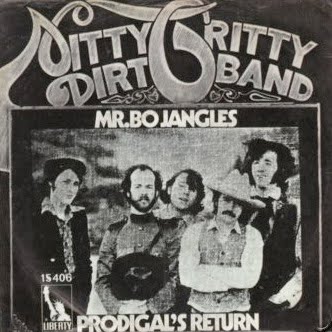
"Mr. Bojangles" is the title of a song originally written and recorded by American country music artist Jerry Jeff Walker (born Ronald Clyde Crosby on March 16, 1942 in Oneonta, New York.) for his 1968 album of the same title. Since then, it has been recorded by many other artists, including American country music band The Nitty Gritty Dirt Band, whose version (recorded for the 1970 album Uncle Charlie & His Dog Teddy) was issued as a single and rose to number nine on the Billboard Hot 100 pop chart in 1971. Live versions of the song appeared on Walker's 1977 album, A Man Must Carry On and his 1980 album The Best of Jerry Jeff Walker.

The song was inspired by an encounter with a street performer in the New Orleans first precinct jail. Although this man could tap dance, the inspiration for the song was not the famous stage and movie dancer Bill "Bojangles" Robinson, nor the New Orleans blues musician Babe Stovall.

According to Walker, a murder on the July 4th weekend of 1965 precipitated the arrest of all the street people in the area. In the crowded cell, a dishevelled, old, homeless man got talking to Walker, who had been arrested earlier in the day. The man told various stories of his life, but the tone darkened after 'Mr Bojangles' recalled his dog that had been run over. Someone then asked for something to lighten the mood and the man obliged with a tap dance."

Recorded versions
The Nitty Gritty Dirt Band
Walker's song has been recorded by many popular artists, including Garth Brooks, Kristofer Åström, Chet Atkins, Hugues Aufray (French version, 1984), Harry Belafonte, Bermuda Triangle Band, David Bromberg, Dennis Brown, The Byrds, JJ Cale, David Campbell, Bobby Cole, Edwyn Collins, Jim Croce, Jamie Cullum, King Curtis, Sammy Davis Jr., John Denver, Neil Diamond, Cornell Dupree, Bob Dylan, Arlo Guthrie, Tom T. Hall, John Holt, Whitney Houston, Queen Ifrica, Billy Joel, Dave Jarvis, Nina Simone, Elton John, Frankie Laine, Lulu, Rod McKuen, Don McLean, MC Neat, Harry Nilsson, Esther Phillips, Ray Quinn, Mike Schank, Frank Sinatra, Todd Snider, Cat Stevens, Jim Stafford, Radka Toneff, Jamie Walker, Robbie Williams, Buck Fisher, Bebe Neuwirth, Nina Simone and Dolly Parton.
Nina Simone

A dance choreographed by Bob Fosse to the song appeared in the 1999 West End & Broadway theater show Fosse, having previously been featured in Fosse's 1978 show Dancin'.

Furthermore, composer Philip Glass makes reference to "Mr. Bojangles" in his minimalist opera Einstein on the Beach.

Jim Carrey also performed this song in his earlier stand up routines and in his first movie Copper Mountain.

Sammy Davis, Jr performed the song on television.

Mr. Bojangles Lyrics

I knew a man Bojangles and he'd dance for you
In worn out shoes
With silver hair, a ragged shirt, and baggy pants
The old soft shoe
He jumped so high, jumped so high
Then he lightly touched down

I met him in a cell in New Orleans I was
down and out
He looked to me to be the eyes of age
as he spoke right out
He talked of life, talked of life, he laughed
clicked his heels and stepped

He said his name "Bojangles" and he danced a lick
across the cell
He grabbed his pants and spread his stance,
Oh he jumped so high and then he clicked his heels
He let go a laugh, let go a laugh
and shook back his clothes all around

Mr. Bojangles, Mr. Bojangles
 Mr. Bojangles, dance

He danced for those at minstrel shows and county fairs
throughout the south
He spoke through tears of 15 years how his dog and him
traveled about
The dog up and died, he up and died
And after 20 years he still grieves

He said I dance now at every chance in honky tonks
for drinks and tips
But most the time I spend behind these county bars
'cause I drinks a bit
He shook his head, and as he shook his head
I heard someone ask him please

Mr. Bojangles, Mr. Bojangles
 Mr. Bojangles, dance..