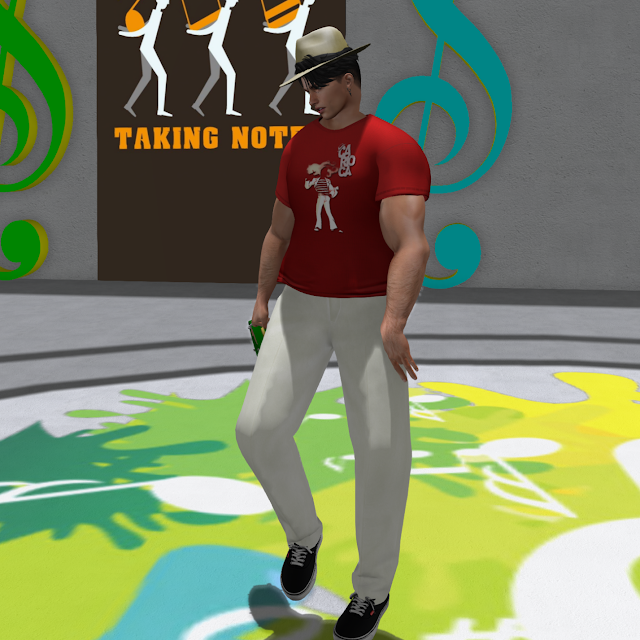
On Saturday March 12th T.R.A.C.S celebrated the end of winter with a special event. We had Mr Mikey who gave a live concert, followed by an after party with DJ Tim. Here are the snapshots I made.


On Saturday March 12th T.R.A.C.S celebrated the end of winter with a special event. We had Mr Mikey who gave a live concert, followed by an after party with DJ Tim. Here are the snapshots I made.

Spring, also known as springtime, is one of the four temperate seasons, succeeding winter and preceding summer. There are various technical definitions of spring, but local usage of the term varies according to local climate, cultures and customs. When it is spring in the Northern Hemisphere, it is autumn in the Southern Hemisphere and vice versa. At the spring (or vernal) equinox, days and nights are approximately twelve hours long, with daytime length increasing and night-time length decreasing as the season progresses.
 In the
Northern Hemisphere (e.g., Germany, the United States, Canada, and the UK), the
astronomical vernal equinox (varying between 19 and 21 March) can be taken to
mark the first day of spring with the summer solstice (around 21 June) marked
as first day of summer.
In the
Northern Hemisphere (e.g., Germany, the United States, Canada, and the UK), the
astronomical vernal equinox (varying between 19 and 21 March) can be taken to
mark the first day of spring with the summer solstice (around 21 June) marked
as first day of summer.Spring and
"springtime" refer to the season, and also to ideas of rebirth,
rejuvenation, renewal, resurrection and regrowth.
Springtime in the Netherlands usually means flowers, bike rides, lounging on the beach or having a drink on a terrace.
We also celebrate our King’s birthday every year on April 27.
These days recorded music is everywhere. Streaming over our phones, our computers, our MP3 players, Pandora, Soundcloud, YouTube, satellite radio – it seems to be coming out of the very air we breathe. There are even “retro” forms in revival, like vinyl and cassettes.
It’s hard to imagine the days when, if you wanted to hear music, you had to make it yourself or know somebody else who did. From then there were several steps – and some interesting detours – to the recording and distribution technology we have today.
Back in
1877 (patents in 1878), Thomas Edison used two needles on tinfoil
cylinders. One needle was for recording and the other for playback. This was
the creation of the phonograph. The first words he recorded were “Mary had a
little lamb”.
T.R.A.C.S parties always has a Trivia, a Money Giver, and a lot of fun.
T.R.A.C.S at Timothy Plaza on River Island
Your taxi to T.R.A.C.S: http://maps.secondlife.com/secondlife/River%20Island/232/246/3051