Thursday, July 10, 2014

Paint It Black

"Paint It Black" is a song released by The Rolling Stones on 13 May 1966 as the first single from the US version of their fourth album Aftermath. Although originally titled without a comma, the release version was styled "Paint It, Black". Keith Richards has stated that the comma was added by the record label, Decca.
The song was written by Mick Jagger and Keith Richards. Jagger wrote the lyrics and Richards wrote the music.

Bill Wyman states in his books that the song was a group effort although it was credited to Jagger/Richards.
The single reached number one in both the United States and the UK Singles Chart in 1966. In 2004 it was ranked number 176 on Rolling Stone magazine's list of the 500 Greatest Songs of All Time. In the US and UK, it was the first number one single to feature a sitar.
Paint it black lyrics
I see a red door and I want it painted black
 No colors anymore, I want them to turn black
 I see the girls walk by dressed in their summer clothes
 I have to turn my head until my darkness goes

I see a line of cars and they're all painted black
 With flowers and my love, both never to come back
 I see people turn their heads and quickly look away
 Like a newborn baby it just happens ev'ryday

I look inside myself and see my heart is black
 I see my red door and I must have it painted black
 Maybe then I'll fade away and not have to face the facts
 It's not easy facing up when your whole world is black

No more will my green sea go turn a deeper blue
 I could not foresee this thing happening to you
 If I look hard enough into the setting sun
 My love will laugh with me before the morning comes

I see a red door and I want it painted black
 No colors anymore I want them to turn black
 I see the girls walk by dressed in their summer clothes
 I have to turn my head until my darkness goes

I want to see your face painted black, black as night, black as coal
 Don't want to see the sun, flying high in the sky
 I want to see it painted, painted, painted, painted black, yeah

Wednesday, July 9, 2014

July 12, 1962

July 12, 2014, marks the 52nd anniversary of the Rolling Stones’ first gig making them, according to the Rock and Roll Hall of Fame, the record holders for rock-band longevity.

The Rolling Stones are an English rock band formed in London in 1962. The first settled line-up consisted of Brian Jones (guitar, harmonica), Ian Stewart (piano), Mick Jagger (lead vocals, harmonica), Keith Richards (guitar), Bill Wyman (bass) and Charlie Watts (drums). Jones left the band less than a month prior to his death in 1969, having already been replaced by Mick Taylor, who left in 1975. Since then Ronnie Wood has been on guitar in tandem with Richards. Following Wyman's departure in 1993, Darryl Jones has been the main bassist. Stewart was removed from the official line-up in 1963 but continued as occasional pianist until his death in 1985. Other notable keyboardists for the band have included Nicky Hopkins, active from 1967 to 1982; Billy Preston through the mid 1970s (most prominent on Black and Blue); and Chuck Leavell, active since 1982. The band was first led by Jones, but after teaming as the band's songwriters, Jagger and Richards assumed de facto leadership.
 
Jagger, Richards and Jones with Stewart and Dick Taylor on bass billed as "the Rollin' Stones" played their first gig on 12 July 1962, at the Marquee Club. The band borrowed money from Jagger's dad to rent equipment for the gig. Their material included the Chicago blues as well as Chuck Berry and Bo Diddley songs.

Here is what the Stones played on that night in 1962, according to meticulous, setlist-documenting Stones fansite.
1. "Kansas City"
2. "Baby What's Wrong"
3. "Confessin' the Blues"
4. "Bright Lights, Big City" 
5. "Dust My Broom" 
6. "Down the Road Apiece" 
7. "I'm a Love You"
8. "Bad Boy"
9. "I Ain't Got You"
10. "Hush-Hush"
11. "Ride 'Em on Down"
12. "Back in the U.S.A."
13. "Kind of Lonesome"
14. "Blues Before Sunrise"
15. "Big Boss Man"
16. "Don't Stay Out All Night"
17. "Tell Me You Love Me"
18. "Happy Home"

So the band debuted as the Rollin' Stones at the Marquee Club on July 12th, 1962. The lineup was Mick Jagger (vocals), Brian Jones (guitar), Keith Richards (guitar), Ian Stewart (piano), Dick Taylor (bass) and Tony Chapman (drums.)
Bassist Bill Wyman joined in December 1962 and drummer Charlie Watts the following January 1963 to form the band's long-standing rhythm section. The Rolling Stones' then acting manager Giorgio Gomelsky secured a Sunday afternoon residency at the Crawdaddy Club, which, Gomelsky said, triggered an "international renaissance for the blues" and was a seminal facet of Swinging London's advent.

In the mid-1960s the Crawdaddy Club was purchased by a young local musician and promoter John Benedict McCoy and his partner Ken Crawford. John McCoy had already proved himself well enough in promoting many accomplished young bands on 'the rise up' as early as 1963. Even booking the Rolling Stones for £65 ($90) and The Hollies at his previous club-venue The Outlook in Middlesbrough. On Saturday 13 July 1963 both The Hollies and The Rolling Stones appeared on the same bill at The Outlook, In fact this was the Rolling Stones first booking outside of Greater London, and this one-off gig was actually 'brokered' as a favour through John McCoys friend, blues-singer Long John Baldry. In Bill Wyman's book "Rolling with the Stones" (a detailed journal of his time with the band) he is adamant that this booking was at a Middlesbrough club called the Alcove. However, there never was a Middlesbrough club of that name. John McCoy’s explanation for this is that he wrote Alcove on the Rolling Stones contract (signed by McCoy and Brian Jones) to give the basement-club a separate identity from the 'Young Outlook' fashion store above it!  An advertisement for this double booking at the "The Outlook" appeared in the Evening Gazette the previous night.
The band continued to play around London clubs that summer. In August, Jagger, Richards and Jones moved into a grimy second-floor apartment at 102 Edith Grove in Fulham, living amongst dirty dishes, two beds and no furniture. Soon, Charlie Watts moved in. "The Rolling Stones spent the first year of their life hanging places, stealing food and rehearsing," Richards remembered. "We were paying to be the Rolling Stones."

Tuesday, July 8, 2014

A Brave New World!

For some time I follow the news about the new Second Life. Think most of you did hear about it.
Saturday ZoHa Islands published this article written by Suzanne Piers, ZI Social Media Manager, which I want to share with you.

“I feel like we’re in a very good place,” Altberg says. “We are the most experienced when it comes to this stuff. We’re bullish; we’re investing; and all the things that are happening around us with Oculus and the market getting excited about these things again [are] great for us. It’ll make it easier for us to attract talent.”

Now that the big news has broken, and some of the hubbub has died down a bit, more information is beginning to be leaked about the new virtual world platform that Linden Labs is developing.

Based on the information in the interview with Oz Linden and Pete Linden last week, Second Life is not going away. Indeed, Linden Labs is working on a new virtual world, but it will be a additional virtual world focused more on virtual reality, not a replacement to Second Life. They reassured anxious residents that Linden Labs is still putting time and effort into the continued development of Second Life, and that even though the team working on SL is smaller, it is no less focused on fixing what isn’t working and developing and improving the current platform.

According to an article appearing on the website Engadget, the new platform will be more focused on virtual reality in a social networking platform. Basically, this new platform will be Second Life on steroids.

According to the article on Engadget, Linden Labs’s CEO Ebbe Altberg’s vision for this new platform includes making it compatible with just about every device its users could possibly own. “How do people interact with the world from their phone, from their pad, from their PC and from their Oculus? All of that we’re solving from the ground up with this new code base,” Altberg says. “Multi-device from day one.”

Engadget states: “Altberg wants this new platform to be a virtual world that embodies everything Linden Lab got right with Second life, but bigger and more accessible. He also thinks of it as a development platform for new games and virtual reality experiences.”

” ‘It’s a platform,’ Altberg says. ‘In some ways, you could compare it to Unity.’ Altberg wants developers to see both Second Life and its eventual successor as game engines they can build their content on. He tries to paint…a picture: ‘I’m going to build an experience that has virtual capabilities,’ he states. ‘Do I use Second Life? Do I use Unity? Do I use Unreal Engine? Well, if you want to use those [latter two], your technical ability needs to be a lot higher and you have to have a team. In Second Life, you just come in and start building.’ If Linden Lab’s follow-up to Second Life has a good Oculus Rift implementation, he explains, then every experience on that platform can be an Oculus experience. ‘So, the bar of entry for anyone to be able to create an Oculus experience … it’s almost like we have the lowest bar possible,’ he says.” Reference: Engadget

The Oculus Rift Virtual Reality headset has been forefront in the news lately, and indeed Second Life has already developed a beta viewer that will accommodate the VR headset. However, users often experience simulator sickness (a form of motion sickness) while using it, which can leave users feeling nauseous, disoriented and uncomfortable. An entire publication on VR Best Practices has been published, and in it are some guidelines for minimum framerates, graphics aliasing and response times, but most of it focuses on creating an experience that feels natural to the user.

“Seemingly simple things, like a player’s walking speed or limitations in camera control, can have a major impact on how uncomfortable a player can feel in a virtual space. The user’s awareness of their own presence in VR is also pretty important. ‘Looking down and having no body is disconcerting,’ the document reads. ‘A full character avatar can do a lot to ground the user in the virtual environment.’ The guide has health warnings too, suggesting that users take 10 to 15 minute breaks for every hour spent in the Oculus Rift and declaring its 3D technology potentially unsafe for children.[credit: Oculus' Best Practices Explained]

Clearly, Ebbe Alberg’s vision for this new VR world includes attracting as many users as possible — he was talking about Facebook-type numbers — and yet not “dumbing down” the experience and keeping it complex enough so that developers will emigrate away from traditional game-development platforms like Unity and Unreal Engine. He wants the complexity to attract high-end game developers and the gamers that play them, yet make it user friendly enough to attract huge numbers of end users. A bit of hyperbole, perhaps? Since the development of this new platform is in its infancy, it remains to be seen.

At this time, Linden Labs’ stance is that the new virtual reality platform is not going to eclipse Second Life; but rather will be another bright star in the galaxy of Linden Labs’ universe.

I remain respectfully yours,
 ~ Suzanne Piers
 ZI Social Media Manager

Sunday, July 6, 2014

ANCIENT WARRIOR & HERO PARTY at T.R.A.C.S

From Sparta, Trojan and Rome, Persia, even from the new world all came and also Carl came to T.R.A.C.S. 
Carl made a lot of snapshots that you can find at his blog Naked Carl.
Corvus had made a great set of songs. Great job, Corvus!

Her are the snapshots I made.
JK
JK and CallMe
from the stone age, Caasper 
Carl
Gany
Sabia and Alvei. In the back Caasper and Duke
Zee
Christo
Simpli
DJ Corvus

Thursday, July 3, 2014

ANCIENT WARRIOR & HERO PARTY at T.R.A.C.S

T.R.A.C.S at Timothy Plaza on River Island

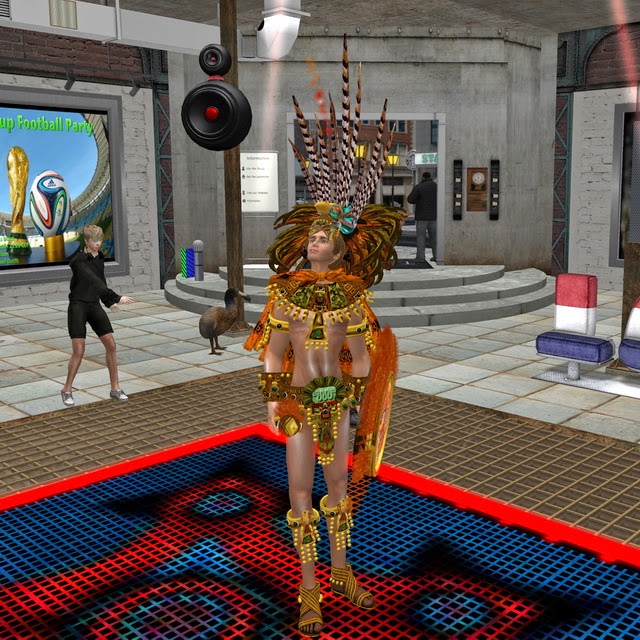
Warrior and Hero

Warrior
A warrior is a person specializing in combat or warfare, especially within the context of a tribal or clan-based society that recognizes a separate warrior class or caste.
Ancient Warriors
There existed a wide variety of ancient warriors, wider than Napoleonic or Modern Times. While more modern armies can be divided up into what we now call traditional branches of the military, ancient warriors only developed such distinctions later. At first ancient warriors organized themselves into whatever military arrangement suited them best militarily in their particular time and place. This is to say that they specialized in a particular weapon that was successful in their particular habitat. Eventually large empires or confederations began using them in a combined arms sort of way. Particular ethnic groups that had particular skills where used for them, while their weaknesses could be covered by other ancient warriors specializing in another style of combat. What came out of the wash was a wide variety of ancient warriors; here are their general categories, steppe warriors, barbarian warriors and the infantry of the “civilized” Greco-Roman world. Additionally, light tribal infantry and cavalry could be included in this mix. Essentially, there are a lot of types of ancient warriors, and that what makes them so interesting! However, in order to make this an article instead of a book we will focus on just the first three mentioned groups.

Ancient warriors have been around forever, in groups, in tribes, in towns and cities. They are the elite warriors who fight for a living, using their battle skills, their armour and their weapons to meet their opponents on the battlefield with only one outcome in their minds.
From the Mayan Tribes and civilisations to the Roman elite fighters to the terrifying Vikings. Weapons have been found all over the world by archaeologists, documenting the history of these ancient people, for whom being a warrior was a natural career path in ancient times.

Amazon Warriors
The legendary all women tribe of Amazon warriors were feared by man and woman alike, tall strong and capable the Amazons would bring the fight to anyone that requested it.

Aztec Warriors
The Aztec warriors fought with order and went to war in order to expand the empire, believing in sacrifice the Aztec's believe in giving to the gods and weren't afraid to do so.

Celtic Warriors
Fearless and wild the Celtic warriors held regard for no man and their battle style reflected this; with wild abandon the Celts would bring aggression and passion to any fight.

Egyptian Warriors
Calculating and organised, the Egyptian warriors were masters of long range combat, get to close and an Egyptian axe may be the last think you would see.

Frank Warriors
The Frank warriors were the ancient fighters that allowed this Germanic tribe to dominate large portion of Europe, eventually settling in modern France.

Germanic Warriors
The ancient Germanic warriors were plenty and mighty, spread across many tribes the Germanic warriors in battle fought with heart and ferocity.
Gladiator Warriors
The Gladiator warriors fought for the crowd and for their life, spending their entire existence training the Gladiators were some of the ultimate warriors of the ancient world.

Goth Warriors
The might Goth warriors were some of the most dangerous Germanic warriors of history, conquering large portions of Europe and splitting into two dominant groups.

Greek Warriors
The mighty Greek Warriors were masters of war, well trained, strong and battle ready, their tactics were among the best known on the battlefields of ancient Greece.

Hawaiian Warriors
The mighty and fierce Hawaiian warriors were a force to behold in battle; their best warriors the Koa were dangerous and skilled in the martial art of Lua.

Japanese Warriors
The diverse range of Japanese warriors is many and skilled, from the might Samurai to the Ashigaru foot soldiers to the Sohei buddhist warriors, and the mountain hermits the Yamabushi.

Mongolian Warriors
The Mongolian warriors were skilled horsemen and archers, motivated and battle ready the Mongolians had battle tactics to flummox the enemy.

Ninja Warriors
Stealth and control were the way of the Ninja warriors, the silent assassins that could scale walls and dispatch enemies in their sleep, the Ninja all mystiques.

Persian Warriors
The Persian warriors were strong in number and relentless, the legendary Persian Immortals would strike fear into the heart of their opponents.

Samurai Warriors
Steeped in mystery and respect, the Samurai warriors were legendary in their time, with their katana to hand, they could dispatch any foe with relative ease.

Spartan Warriors
The mighty Spartan warriors were some of the strongest and battle hardened fighters ever to exist, by training from a young age, they were masters of the battle.

Viking Warriors
Wild and rampaging, the Viking warriors were feared by all, masters of the raid attack the Vikings were natural warriors with a disregard for their enemy.

Hero
A hero (masculine) or heroine (feminine) refers to characters who, in the face of danger and adversity or from a position of weakness, display courage and the will for self-sacrifice—that is, heroism—for some greater good of all humanity. This definition originally referred to martial courage or excellence but extended to more general moral excellence.

Stories of heroism may serve as moral examples. In classical antiquity, cults that venerated deified heroes such as Heracles, Perseus, and Achilles played an important role in Ancient Greek religion. Politicians, ancient and modern, have employed hero worship for their own apotheosis (i.e., cult of personality). Stories of the anti-hero also play a major role in Greek mythology and much of literature. The anti-hero is a protagonist whose qualities are the last expected from a person in certain situations; an anti-hero often lacks the typical characteristics of heroism, such as honor, nobility, bravery, compassion, and fortitude.

Heroes feature prominently in the wars, myths, and literature of the ancient world. Not all these people would be heroes by today's standards, and some wouldn't be by Classical Greek standards. What makes a hero changes with the era, but it's often tied up with concepts of bravery and virtue. Incidentally, although there are women here, "virtue" comes from the word for man.

Wednesday, July 2, 2014

Ancient history

Ancient history is the aggregate of past events from the beginning of recorded human history to the Early Middle Ages or the Postclassical Era. The span of recorded history is roughly 5,000 years, with Sumerian Cuneiform script, the oldest discovered form of coherent writing, from the protoliterate period around the 30th century BC.
 The term classical antiquity is often used to refer to history in the Old World from the beginning of recorded Greek history in 776 BC (First Olympiad). This roughly coincides with the traditional date of the founding of Rome in 753 BC, the beginning of the history of ancient Rome, and the beginning of the Archaic period in Ancient Greece. Although the ending date of ancient history is disputed, some Western scholars use the fall of the Western Roman Empire in 476 AD, the closure of the Platonic Academy in 529 AD, the death of the emperor Justinian I, the coming of Islam or the rise of Charlemagne as the end of ancient and Classical European history.

In India, the period includes the early period of the Middle Kingdoms, and, in China, the time up to the Qin Dynasty is included.

Timeline of ancient history

Bronze Age and Early Iron Age
The Bronze Age refers to a period in human cultural development when the most advanced metalworking (at least in systematic and widespread use) included techniques for smelting copper and tin from naturally-occurring outcroppings of copper ores, and then smelting those ores to cast bronze. These naturally-occurring ores typically included arsenic as a common impurity. Copper/tin ores are rare, as reflected in the fact that there were no tin bronzes in western Asia before 3000 BC. In some parts of the world, a Copper Age follows the Neolithic and precedes the Bronze Age.

The Iron Age was the stage in the development of any people in which tools and weapons whose main ingredient was iron were prominent. The adoption of this material coincided with other changes in some past societies often including differing agricultural practices, religious beliefs and artistic styles, although this was not always the case.
  •  c. 3500 BC: Egyptian calendar
  • 3300 BC: Bronze Age begins in the Near East
  • 3300 BC: Newgrange Ireland
  • 3300 BC: Hakra Phase of the Indus Valley Civilization begins in the Indian Sub-continent.
  • 3300-3000 BC: Saflieni phase in Maltese prehistory
  • 3200 BC: Cycladic civilization in Greece
  • 3200 BC: Norte Chico civilization begins in Peru
  • 3200 BC: Rise of Proto-Elamite Civilization in Iran
  • 3100 BC: Skara Brae Scotland
  • 3100 BC: First dynasty of Egypt
  • c. 3000 BC: Sumerian cuneiform writing system.
  • c. 3000 BC: Stonehenge construction begins. In its first version, it consisted of a circular ditch and bank, with 56 wooden posts.
  • c. 3000 BC: Cucuteni-Trypillian culture in Romania and the Ukraine
  • 3000 BC: Jiroft civilization begins in Iran
  • 3000 BC: First known use of papyrus by Egyptians
  • 2800 BC: Kot Diji phase of the Indus Valley Civilization begins
  • 2800 BC: Three Sovereigns and Five Emperors period in China
  • 2700 BC: Minoan Civilization ancient palace city Knossos reach 80,000 inhabitants
  • 2700 BC: Rise of Elam in Iran
  • 2700 BC: The Old Kingdom begins in Egypt
  • 2600 BC: Oldest known surviving literature: Sumerian texts from Abu Salabikh, including the Instructions of Shuruppak and the Kesh temple hymn.
  • 2600 BC: Mature Harappan phase of the Indus Valley civilization (in present-day Pakistan and India) begins
  • 2600 BC: Emergence of Maya culture in the Yucatán Peninsula
  • 2560 BC: King Khufu completes the Great Pyramid of Giza.
  • 2500 BC: The mammoth goes extinct.
  • 2200 -2100 BC: 4.2 kiloyear event: a severe aridification phase, likely connected to a Bond event, which was registered throughout most North Africa, Middle East and continental North America. Related droughts very likely caused the collapse of the Old Kingdom in Egypt and of the Akkadian Empire in Mesopotamia.
  • 2200 BC: completion of Stonehenge.
  • 2070 BC: Yu the Great established the Xia Dynasty in China
  • 2000 BC: Domestication of the horse
  • 1800 BC: alphabetic writing emerges
  • 1700 BC: Indus Valley Civilization comes to an end but is continued by the Cemetery H culture; The beginning of Poverty Point Civilization in North America
  • 1600 BC: Minoan civilization on Crete is destroyed by the Minoan eruption of Santorini island.
  • 1600 BC: Mycenaean Greece
  • 1600 BC: The beginning of Shang Dynasty in China, evidence of a fully developed Chinese writing system
  • 1600 BC: Beginning of Hittite dominance of the Eastern Mediterranean region
  • 1500 BC: Composition of the Rigveda is completed
  • 1400-400 BC: Olmec civilization flourishes in Pre-Columbian Mexico, during Mesoamerica's Formative period
  • 1200 BC: The Hallstatt culture
  • 1200-1150 BC: Bronze Age collapse in Southwestern Asia and in the Eastern Mediterranean region. This period is also the setting of the Iliad and the Odyssey epic poems (which were composed about four centuries later).
  • c. 1180 BC: Disintegration of Hittite Empire
  • 1100 BC: Use of Iron spreads.
  • 1046 BC: The Zhou force (led by King Wu of Zhou) overthrow the last king of Shang Dynasty; Zhou Dynasty established in China
  • 1020 to 930 BC: The beginning of the Kingdom of Israel (united monarchy) occurred sometime between these dates
  • 890 BC: Approximate date for the composition of the Iliad and the Odyssey
  • 800 BC: Rise of Greek city-states

Classical Antiquity
Classical antiquity is a broad term for a long period of cultural history centered on the Mediterranean Sea, comprising the interlocking civilizations of Ancient Greece and Ancient Rome. It refers to the timeframe of Ancient Greece and Ancient Rome. Ancient history includes the recorded Greek history beginning in about 776 BC (First Olympiad). This coincides roughly with the traditional date of the founding of Rome in 753 BC and the beginning of the history of Rome.

  •  776 BC: First recorded Olympic Games.
  • 753 BC: Founding of Rome (traditional date)
  • 745 BC: Tiglath-Pileser III becomes the new king of Assyria. With time he conquers neighboring countries and turns Assyria into an empire.
  • 728 BC: Rise of the Median Empire.
  • 722 BC: Spring and Autumn Period begins in China; Zhou Dynasty's power is diminishing; the era of the Hundred Schools of Thought.
  • 700 BC: the construction of Marib Dam in Arabia Felix.
  • 660 BC: purported date of the accession of Jimmu, the mythical first Emperor of Japan.
  • 653 BC: Rise of Persian Empire.
  • 612 BC: An alliance between the Babylonians, Medes, and Scythians succeeds in destroying Nineveh and causing subsequent fall of the Assyrian empire.
  • 600 BC: Sixteen Maha Janapadas ("Great Realms" or "Great Kingdoms") emerge in India.
  • 600 BC: Evidence of writing system appear in Oaxaca used by the Zapotec civilization.
  • c. 600 BC: Pandyan kingdom in South India.
  • 586 BC: Destruction of the First Temple in Jerusalem (Solomon's Temple) by the Babylonians.
  • 563 BC: Siddhartha Gautama (Buddha), founder of Buddhism is born as a prince of the Shakya tribe, which ruled parts of Magadha, one of the Maha Janapadas.
  • 551 BC: Confucius, founder of Confucianism, is born.
  • 550 BC: Foundation of the Persian Empire by Cyrus the Great.
  • 549 BC: Mahavira, founder of Jainism is born.
  • 546 BC: Cyrus the Great overthrows Croesus King of Lydia.
  • 544 BC: Rise of Magadha as the dominant power under Bimbisara.
  • 539 BC: The Fall of the Babylonian Empire and liberation of the Jews by Cyrus the Great.
  • 529 BC: Death of Cyrus
  • 525 BC: Cambyses II of Persia conquers Egypt.
  • c. 512 BC: Darius I (Darius the Great) of Persia, subjugates eastern Thrace, Macedonia submits voluntarily, and annexes Libya, Persian Empire at largest extent.
  • 509 BC: Expulsion of the last King of Rome, founding of Roman Republic (traditional date).
  • 508 BC: Democracy instituted at Athens
  • c. 500 BC: completion of Euclid's Elements
  • 500 BC: Panini standardizes the grammar and morphology of Sanskrit in the text Ashtadhyayi. Panini's standardized Sanskrit is known as Classical Sanskrit
  • 500 BC: Pingala uses zero and binary numeral system
  •  499 BC: King Aristagoras of Miletus incites all of Hellenic Asia Minor to rebel against the Persian Empire, beginning the Greco-Persian Wars.
  • 490 BC: Greek city-states defeat Persian invasion at Battle of Marathon
  • 483 BC: Death of Gautama Buddha
  • 480 BC: Persian invasion of Greece by Xerxes; Battles of Thermopylae and Salamis
  • 479 BC: Death of Confucius
  • 475 BC: Warring States period begins in China as the Zhou king became a mere figurehead; China is annexed by regional warlords
  • 470/469 BC: Birth of Socrates
  • 465 BC: Murder of Xerxes
  • 458 BC: The Oresteia by Aeschylus, the only surviving trilogy of ancient Greek plays, is performed.
  • 449 BC: The Greco-Persian Wars end.
  • 447 BC: Building of the Parthenon at Athens started
  • 432 BC: Construction of the Parthenon is completed
  • 431 BC: Beginning of the Peloponnesian war between the Greek city-states
  • 429 BC: Sophocles's play Oedipus the King is first performed
  • 427 BC: Birth of Plato
  • 424 BC: Nanda dynasty comes to power.
  • 404 BC: End of the Peloponnesian War
  • 400 BC: Zapotec culture flourishes around city of Monte Albán
  • 399 BC: Death of Socrates
  • 384 BC: Birth of Aristotle
  • 331 BC: Alexander the Great defeats Darius III of Persia in the Battle of Gaugamela, completing his conquest of Persia.
  • 326 BC: Alexander the Great defeats Indian king Porus in the Battle of the Hydaspes River.
  • 323 BC: Death of Alexander the Great at Babylon.
  • 321 BC: Chandragupta Maurya overthrows the Nanda Dynasty of Magadha.
  • 305 BC: Chandragupta Maurya seizes the satrapies of Paropanisadai (Kabul), Aria (Herat), Arachosia (Qanadahar) and Gedrosia (Baluchistan)from Seleucus I Nicator, the Macedonian satrap of Babylonia, in return for 500 elephants.
  • 300 BC: Construction of the world's largest pyramid, the Great Pyramid of Cholula, begins in Cholula, Puebla, Mexico.
  • 273 BC: Ashoka the Great becomes the emperor of the Mauryan Empire
  • 257 BC: Thục Dynasty takes over Việt Nam (then Kingdom of Âu Lạc)
  • 250 BC: Rise of Parthia (Ashkâniân), the second native dynasty of ancient Persia
  • 232 BC: Death of Emperor Ashoka the Great; Decline of the Mauryan Empire
  • 230 BC: Emergence of Satavahanas in South India
  • 221 BC: Qin Shi Huang unifies China, end of Warring States period; marking the beginning of Imperial rule in China which lasts until 1912. Construction of the Great Wall by the Qin Dynasty begins.
  • 207 BC: Kingdom of Nan Yueh extends from North Việt Nam to Canton.
  • 206 BC: Han Dynasty established in China, after the death of Qin Shi Huang; China in this period officially becomes a Confucian state and opens trading connections with the West, i.e. the Silk Road.
  • 202 BC: Scipio Africanus defeats Hannibal at Battle of Zama.
  • 200 BC: El Mirador, largest early Maya city, flourishes.
  • c. 200 BC: Chera dynasty in South India.
  • 185 BC: Sunga Empire founded.
  • 149-146 BC: Third Punic War between Rome and Carthage. War ends with the complete destruction of Carthage, allowing Rome to conquer modern day Tunisia and Libya.
  • 146 BC: Roman conquest of Greece, see Roman Greece
  • 129 BC: Roman conquest of Turkey.
  • 121 BC: Roman armies enter Gaul for the first time.
  • 111 BC: First Chinese domination of Việt Nam in the form of the Nanyue Kingdom.
  • c. 100 BC: Chola dynasty rises in prominence.
  • 80 BC: The city of Florence is founded.
  • 49 BC: Roman Civil War between Julius Caesar and Pompey the Great.
  • 44 BC: Julius Caesar murdered by Marcus Brutus and others; End of Roman Republic; beginning of Roman Empire.
  • 40 BC: Roman conquest of Egypt.
  • 18 BC: Three Kingdoms period begins in Korea.
  • 6 BC: Earliest theorized date for birth of Jesus of Nazareth.
  • 4 BC: Widely accepted date (Ussher) for birth of Jesus Christ.
  • 9: Battle of the Teutoburg Forest, the Imperial Roman Army's bloodiest defeat.
  • 14: Death of Emperor Augustus (Octavian), ascension of his son Tiberius to the throne.
  • 24: The temple of Jerusalem is reconstructed.
  • 26-34: Crucifixion of Jesus Christ, exact date unknown.
  • 37: Death of Emperor Tiberius, ascension of his nephew Caligula to the throne.
  • 40: Rome conquers Morocco.
  • 41: Emperor Caligula is assassinated by the Roman senate. His uncle Claudius succeeds him.
  • 43: Rome enters Britain for the first time.
  • 54: Emperor Claudius dies and is succeeded by his grand nephew Nero.
  • 68: Emperor Nero commits suicide, prompting the Year of the four emperors in Rome.
  • 70: Destruction of Jerusalem by the armies of Titus.
  • 79: Destruction of Pompeii by the volcano Vesuvius.
  • 98: After a two-year rule, Emperor Nerva dies of natural causes, his adopted son Trajan succeeds him.
  • 106-117: Roman Empire at largest extent under Emperor Trajan after having conquered modern-day Romania, Iraq and Armenia.
  • 117: Trajan dies of natural causes. His adopted son Hadrian succeeds him. Hadrian pulls out of Iraq and Armenia.
  • 126: Hadrian completes the Pantheon in Rome.
  • 138: Hadrian dies of natural causes. His adopted son Antoninus Pius succeeds him.
  • 161: Death of Antoninus Pius. His rule was the only one in which Rome did not fight in a war.
  • 192: Kingdom of Champa in Central Việt Nam.
  • 200s: The Buddhist Srivijaya Empire established in Maritime Southeast Asia.
  • 220: Three Kingdoms period begins in China after the fall of Han Dynasty.
  • 226: Fall of the Parthian Empire and Rise of the Sassanian Empire.
  • 238: Defeat of Gordian III (238–244), Philip the Arab (244–249), and Valerian (253–260), by Shapur I of Persia, (Valerian was captured by the Persians).
  • 280: Emperor Wu established Jin Dynasty providing a temporary unity of China after the devastating Three Kingdoms period.
  • 285: Diocletian becomes emperor of Rome and splits the Roman Empire into Eastern and Western Empires.
  • 285: Diocletian begins the biggest prosecution of Christians in Roman history.
  • 292: The capital of the Roman empire is officially moved from Rome to Mediolanum (modern day Milan).
  • 313: Edict of Milan declared that the Roman Empire would be neutral toward religious worship.
  • 325: Constantine I organizes the First Council of Nicaea.
  • 330: Constantinople is officially named and becomes the capital of the eastern Roman Empire.
  • 335: Samudragupta becomes the emperor of the Gupta empire.
  • 337: Emperor Constantine I dies, leaving his sons Constantius II, Constans I, and Constantine II as the emperors of the Roman empire.
  • 350: Constantius II is left sole emperor with the death of his two brothers.
  • 354: Birth of Augustine of Hippo
  • 361: Constantius II dies, his cousin Julian succeeds him.
  • 378: Battle of Adrianople, Roman army is defeated by the Germanic tribes.
  • 380: Roman Emperor Theodosius I declares the Arian faith of Christianity heretical. Traditional date for the founding of the Catholic Church.
  • 395: Theodosius I outlaws all pagan religions in favor of Christianity.
  • 406: Romans are expelled from Britain.
  • 407-409: Visigoths and other Germanic tribes cross into Roman-Gaul for the first time.
  • 410: Visigoths sacks Rome for the first time since 390 BC.
  • 415: Germanic tribes enter Spain.
  • 429: Vandals enter North Africa from Spain for the first time
  • 439: Vandals have conquered the land stretching from Morocco to Tunisia by this time.
  • 455: Vandals sack Rome, capture Sicily and Sardinia.
  • c. 455: Skandagupta repels an Indo-Hephthalite attack on India.
  • 476: Romulus Augustus, last Western Roman Emperor is forced to abdicate by Odoacer, a chieftain of the Germanic Heruli; Odoacer returns the imperial regalia to Eastern Roman Emperor Zeno in Constantinople in return for the title of dux of Italy; most frequently cited date for the end of ancient history.

End of ancient history in Europe
The date used as the end of the ancient era is entirely arbitrary. The transition period from Classical Antiquity to the Early Middle Ages is known as Late Antiquity. Late Antiquity is a periodization used by historians to describe the transitional centuries from Classical Antiquity to the Middle Ages, in both mainland Europe and the Mediterranean world: generally from the end of the Roman Empire's Crisis of the Third Century (c. AD 284) to the Islamic conquests and the re-organization of the Byzantine Empire under Heraclius. The Early Middle Ages are a period in the history of Europe following the fall of the Western Roman Empire spanning roughly five centuries from AD 500 to 1000. Not all historians agree on the ending dates of ancient history, which frequently falls somewhere in the 5th, 6th, or 7th century. Western scholars usually date the end of ancient history with the fall of Rome in AD 476, the death of the emperor Justinian I in AD 565, or the coming of Islam in AD 632 as the end of ancient European history.
Source WikiPedia